
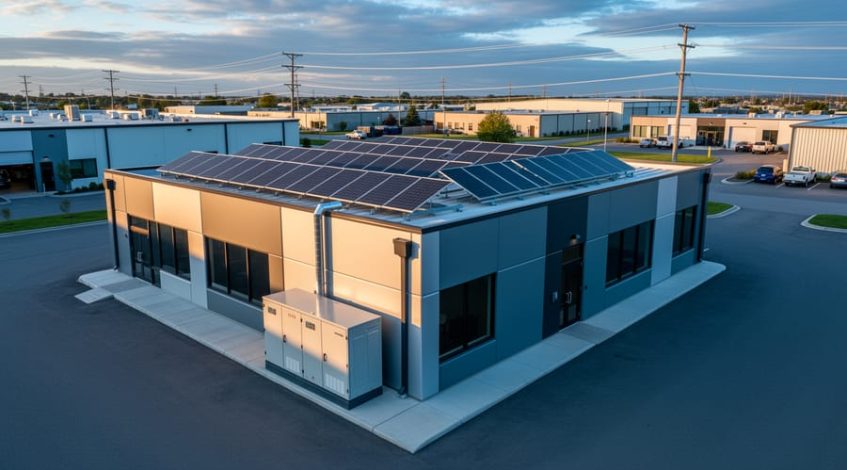
A 7kW solar system with battery backup represents a strategic investment threshold for small to medium-sized commercial operations, delivering approximately 28-35 kWh of daily energy production while providing critical power security during grid outages. This configuration has emerged as the optimal balance point for businesses consuming 700-1,000 kWh monthly, offering complete energy independence during peak demand periods without the capital expenditure of oversized systems.
The integration of battery storage transforms a standard 7kW solar array from a grid-dependent installation into a resilient power solution capable of maintaining operations during utility disruptions. Current market data indicates commercial installations achieve full return on investment within 5-7 years, with battery systems extending operational value by eliminating demand charges and enabling time-of-use optimization. Businesses implementing this configuration report average energy cost reductions of 60-75% while securing protection against escalating utility rates.
Facility managers evaluating this system size must consider three primary factors: actual consumption patterns, available roof or ground space for approximately 40-45 solar panels, and specific backup power requirements during outages. The financial viability depends heavily on local electricity rates, available incentives, and whether your operation experiences frequent grid instability. This analysis examines technical specifications, real-world performance data from commercial installations, accurate cost projections including battery storage, and decision frameworks to determine if a 7kW system aligns with your facility’s energy profile and business objectives.
Understanding the 7kW Solar System Configuration
Energy Output and Commercial Applications
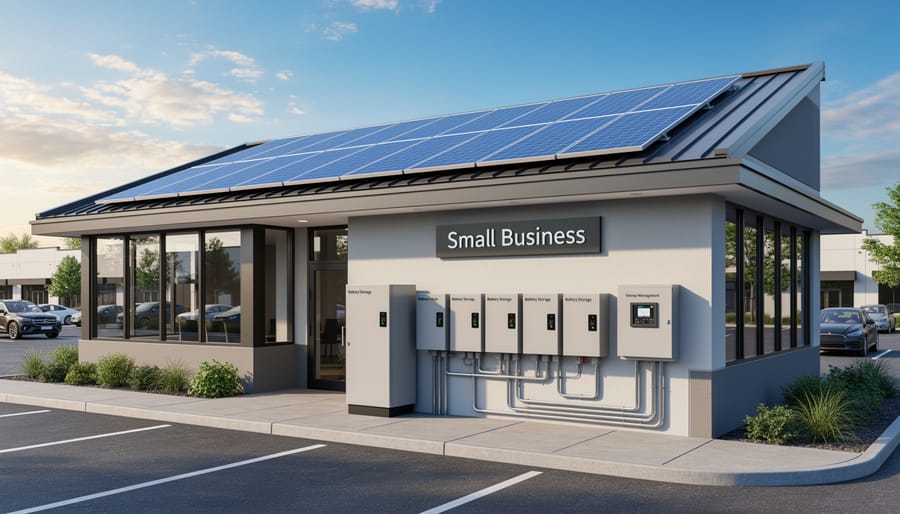
A properly configured 7kW solar system with battery backup typically generates between 28-35 kWh daily, translating to approximately 10,200-12,775 kWh annually. Actual output varies based on geographic location, panel orientation, and seasonal weather patterns. Peak production occurs during summer months, while winter generation may decrease by 30-40% in northern latitudes.
This system configuration serves small to medium-sized commercial facilities effectively. Ideal applications include professional offices (2,000-3,500 square feet), neighborhood retail stores, medical clinics, and small warehouses with moderate electrical demands. The system handles typical commercial loads including HVAC units, lighting systems, refrigeration, computers, and point-of-sale equipment.
For facilities with average daily consumption of 25-30 kWh, a 7kW system with adequate battery storage can achieve 80-100% energy independence during daylight hours. The battery backup ensures continuous operation during grid outages and enables strategic load shifting to reduce demand charges. Manufacturing facilities with single-shift operations and small distribution centers with consistent baseline loads represent optimal use cases. When properly sized, this configuration supports business continuity while delivering measurable reductions in operating expenses and demonstrable progress toward corporate sustainability objectives.
The Generation-Consumption Mismatch Problem
Commercial facilities face a fundamental challenge with solar energy: peak electricity consumption rarely coincides with peak solar generation. Solar panels produce maximum output during midday hours, typically between 10 AM and 2 PM, when the sun’s intensity is strongest. However, many businesses experience their highest electricity demands during early morning startup operations, late afternoon production peaks, or evening shifts when solar generation has already declined or ceased entirely.
This timing mismatch creates a critical inefficiency. Without storage capacity, excess solar energy generated during peak production hours flows back to the grid at minimal wholesale rates, while businesses must purchase electricity at premium rates during their actual peak demand periods. For facilities with time-of-use tariffs, this disparity becomes particularly costly, as evening and early morning rates can be 2-3 times higher than midday rates.
A 7kW solar system with battery backup directly addresses this challenge by capturing surplus daytime generation and deploying it strategically when your operations need it most. This approach transforms solar from a partial solution into a comprehensive energy management strategy, maximizing self-consumption rates and delivering measurable cost reductions across your entire operational schedule.
Battery Storage Solutions: Sizing for Your 7kW System
Recommended Battery Capacities
For a 7kW solar system, battery capacity typically ranges from 10kWh to 20kWh, depending on your facility’s specific energy requirements and backup objectives. The optimal capacity depends on three primary factors: evening and morning electricity consumption, desired backup duration, and daily load patterns.
To calculate your appropriate battery size, begin by analyzing your facility’s consumption during non-solar hours. Review utility bills or energy monitoring data to determine average evening usage from 5 PM to 10 PM and morning loads from 6 AM to 9 AM. For instance, if your facility consumes 15kWh during these combined periods, a 15kWh battery would provide one day of coverage for these critical hours.
Consider backup duration requirements next. A 10kWh battery provides approximately 8-10 hours of backup for essential loads drawing 1-1.5kW continuously. Medium-capacity systems at 15kWh support 12-15 hours of backup, suitable for facilities requiring overnight operations. Larger 20kWh configurations deliver extended backup capabilities, often 18-24 hours for critical systems.
Industry applications demonstrate these principles effectively. A medical clinic requiring uninterrupted refrigeration and computer systems typically selects 15kWh capacity, ensuring reliable backup during grid outages while maximizing solar energy utilization. Manufacturing facilities with evening production shifts often implement 20kWh batteries to reduce peak demand charges and maintain operations during utility disruptions.
Calculate your ideal capacity by multiplying average non-solar hour consumption by your desired backup days, then adding 20 percent for system efficiency losses and battery longevity. This approach ensures reliable performance and optimal return on investment for your specific operational requirements.
Lithium-Ion vs. Other Battery Technologies
For commercial solar installations, understanding the differences between available battery technologies is essential for maximizing return on investment. Lithium-ion batteries have emerged as the preferred choice for most commercial applications, offering superior lifecycle performance compared to traditional lead-acid alternatives.
Lithium-ion systems typically provide 4,000 to 6,000 charge cycles at 80-90% depth of discharge, while lead-acid batteries deliver only 1,000-1,500 cycles at 50% depth of discharge. This translates to significantly lower lifecycle costs despite higher upfront investment. Most lithium-ion batteries carry 10-year warranties with guaranteed capacity retention of 60-70%, compared to 5-year warranties for lead-acid options.
Maintenance requirements further differentiate these technologies. Lithium-ion systems operate maintenance-free with integrated battery management systems, while lead-acid batteries require regular water topping, terminal cleaning, and equalization charging. For commercial facilities prioritizing operational efficiency, lithium-ion’s minimal maintenance demands reduce long-term labor costs and system downtime. Additionally, lithium-ion batteries occupy 50-60% less space and weigh considerably less, making them ideal for facilities with space constraints or rooftop installations where weight considerations are critical.
Scalability and Future Expansion
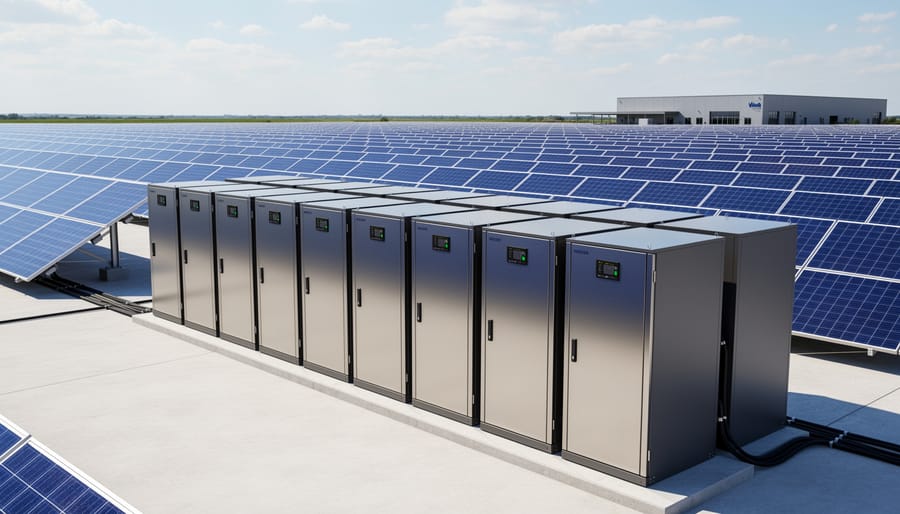
Modern 7kW solar systems with battery backup offer significant scalability advantages for businesses planning long-term energy strategies. Modular battery configurations enable facility managers to start with essential capacity and expand storage as operational demands increase, minimizing initial capital outlay while maintaining upgrade flexibility.
Leading manufacturers design battery systems with stackable architectures, allowing seamless integration of additional units without replacing existing infrastructure. This approach proves particularly valuable for businesses experiencing gradual growth or seasonal demand fluctuations. A retail operation, for instance, might initially install 10kWh of storage capacity and later expand to 20kWh as inventory systems and refrigeration needs grow.
When planning for future expansion, consider inverter capacity ratings and electrical infrastructure requirements. Oversizing inverters during initial installation can accommodate additional panels and batteries without costly replacements. Installing conduit pathways and adequate electrical panel capacity during construction reduces retrofit expenses significantly.
Financial planning should account for battery technology advancements and potential cost reductions. Many businesses implement phased deployment strategies, leveraging tax incentives across multiple fiscal years while benefiting from improving battery performance and declining prices. This strategic approach maximizes return on investment while maintaining operational resilience throughout the expansion timeline.
Financial Analysis: Investment and ROI
Total System Costs and Pricing Breakdown
A complete 7kW solar system with battery backup typically ranges from $18,000 to $32,000, depending on battery capacity and component specifications. This investment breaks down into several key cost categories that facility managers should understand when evaluating proposals.
The solar array itself, comprising premium-tier panels and mounting hardware, generally accounts for $8,000 to $12,000 of the total. Installation labor adds approximately $3,000 to $5,000, varying by roof complexity and electrical integration requirements. Battery storage represents the most variable cost component: a 10kWh lithium-ion system adds $7,000 to $10,000, while 20kWh configurations increase costs by $13,000 to $18,000.
Additional expenses include electrical upgrades, permit fees, and system monitoring equipment, typically totaling $2,000 to $4,000. Integration costs vary significantly based on existing infrastructure—facilities with modern electrical panels and optimal roof conditions will see lower installation expenses than those requiring substantial upgrades.
Several variables influence final pricing. Geographic location affects both labor rates and permitting costs. System complexity, including the number of battery units and inverter specifications, directly impacts installation time. Equipment tier selection also matters: while budget components reduce upfront costs, premium manufacturers often provide superior warranties and performance guarantees.
Federal tax credits currently offset 30 percent of qualified expenses, with many states offering additional incentives. When evaluating proposals, business owners should request itemized breakdowns distinguishing equipment costs from installation services to ensure competitive pricing and identify potential optimization opportunities.
Savings Mechanisms and Revenue Streams
A 7kW solar system with battery backup delivers substantial financial benefits through multiple mechanisms that directly impact your operational costs. Peak demand charge reduction represents one of the most significant savings opportunities for commercial facilities. By drawing stored energy during high-demand periods rather than pulling from the grid, businesses can substantially lower demand charges that often constitute 30-50% of commercial electricity bills.
Time-of-use optimization allows strategic energy deployment, utilizing battery power during expensive peak-rate periods while recharging during off-peak hours when electricity costs are lowest. This arbitrage capability can reduce energy costs by 20-40% depending on your utility rate structure and consumption patterns.
Grid independence benefits extend beyond immediate cost savings. During outages, battery backup maintains critical operations, preventing revenue loss and protecting sensitive equipment. A manufacturing facility in Queensland reported avoiding $45,000 in lost productivity during a three-day grid failure by maintaining operations through their battery system.
Many jurisdictions now offer demand response programs where businesses receive compensation for reducing grid consumption during peak periods. These revenue streams can generate additional annual income ranging from $500 to $3,000 for systems of this capacity.
The combined effect of these mechanisms typically delivers a return on investment within 4-7 years, with systems continuing to generate value for 20-25 years, making battery-backed solar installations increasingly attractive for cost-conscious business operators.
Payback Period and Long-Term Value
Calculating return on investment for a 7kW solar system with battery backup requires examining several key metrics. The payback period typically ranges from 5 to 8 years for commercial installations, depending on energy consumption patterns, local electricity rates, and available incentives. ROI calculations should factor in the system’s initial investment, operational savings from reduced grid dependency, and additional revenue streams from excess energy production.
Several factors accelerate returns significantly. Federal tax credits, state-level rebates, and accelerated depreciation schedules can reduce the effective system cost by 30-50%. Energy price escalation also improves long-term value, with commercial electricity rates historically increasing 2-4% annually. Battery backup systems enhance ROI by enabling load shifting during peak demand periods when rates are highest, potentially adding 15-20% to annual savings.
Real-world applications demonstrate strong performance. A mid-sized facility in California achieved full payback within 6.2 years, benefiting from time-of-use rate optimization and demand charge reduction. Over a 25-year system lifespan, businesses typically realize 300-400% total returns, making this investment financially compelling alongside sustainability objectives.
Operational Benefits Beyond Cost Savings
Business Continuity and Backup Power
For commercial operations, unplanned power outages translate directly to lost revenue, compromised safety systems, and potential data loss. A 7kW solar system with battery backup delivers reliable power continuity when grid failures occur, maintaining critical functions until normal operations resume.
The financial impact varies significantly by facility type. Healthcare clinics require uninterrupted power for medical equipment and refrigerated medications, where even brief outages create liability risks. Retail locations lose point-of-sale capabilities and potential sales during peak hours. Manufacturing facilities face production line shutdowns that cascade into delayed deliveries and contractual penalties. Data centers and IT-dependent businesses risk corrupted systems and lost client confidence.
Battery storage systems typically provide 4-8 hours of backup power for essential loads, with capacity scalable based on operational requirements. Advanced monitoring systems detect grid interruptions in milliseconds, seamlessly transitioning to stored energy without disrupting sensitive equipment. This automatic switching protects against both complete blackouts and damaging voltage fluctuations.
A regional accounting firm in Oregon documented zero downtime during three separate grid outages in 2023, maintaining client services while neighboring businesses closed. The system prevented an estimated $18,000 in lost billable hours and preserved their reputation for reliability. For operations where continuity directly impacts revenue and customer trust, battery backup transforms from optional upgrade to essential infrastructure investment.
Energy Independence and Grid Support
A 7kW solar system with battery backup provides strategic protection against rising energy costs while reducing dependence on grid electricity during peak demand periods. Battery storage enables facilities to shift consumption away from expensive peak-rate hours by drawing on stored solar energy, effectively hedging against future utility rate increases that typically average 2-3% annually in most markets.
The system’s battery component offers immediate backup capability during grid outages, ensuring business continuity for critical operations. For commercial facilities, even brief power interruptions can result in lost productivity, spoiled inventory, or compromised security systems. The backup capacity of a properly sized battery system eliminates these vulnerabilities while maintaining operational control independent of utility service reliability.
Beyond self-consumption benefits, battery-equipped solar systems position businesses to participate in emerging grid stability programs. Many utilities and grid operators now offer compensation for commercial customers who make stored energy available during peak demand events through demand response programs. These initiatives provide additional revenue streams while supporting regional grid infrastructure without requiring significant operational changes.
The combination of reduced grid reliance and potential participation in utility programs creates a more predictable energy cost structure. Facilities can forecast electricity expenses with greater accuracy, insulating budgets from market volatility. This financial predictability proves particularly valuable for organizations managing multi-year operational budgets or seeking to demonstrate environmental stewardship alongside fiscal responsibility. The investment in battery backup transforms solar installations from simple generation assets into comprehensive energy management tools that deliver sustained value across multiple performance dimensions.
Real-World Applications and Case Studies
Small Manufacturing Facility Implementation
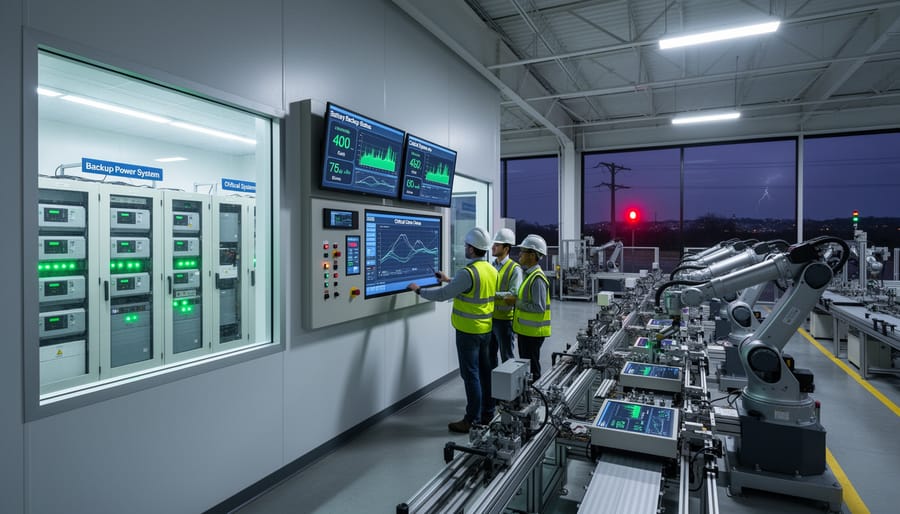
A precision parts manufacturer in the Midlands successfully implemented a 7kW solar system paired with a 15kWh battery storage solution to address escalating energy costs and operational reliability concerns. The facility’s production schedule concentrated high-energy CNC machining operations during daytime hours, resulting in substantial peak demand charges that significantly inflated monthly electricity bills.
The installation achieved multiple strategic objectives. Solar generation directly offset approximately 65% of daytime energy consumption, while the battery system enabled intelligent load shifting by charging during off-peak periods and discharging during peak demand windows. This demand management strategy reduced peak charges by 47%, translating to annual savings of £3,840 beyond the direct energy cost reductions from solar production.
The battery backup proved essential for maintaining operations during two grid outages over the first operational year. The 15kWh capacity provided sufficient power to complete in-progress machining cycles, preventing material waste and preserving expensive tooling that requires controlled shutdown procedures. The facility manager calculated that avoiding just one emergency shutdown justified 18% of the battery system investment.
System monitoring data revealed that strategic battery deployment during winter months, when solar production decreased, maintained consistent demand charge reductions year-round. The combined solution delivered a projected payback period of 6.2 years, with the manufacturer qualifying for enhanced capital allowances that improved initial cash flow. This implementation demonstrates how appropriately sized solar-plus-storage systems deliver measurable operational and financial benefits for energy-intensive manufacturing environments.
Retail and Office Applications
For retail stores and office buildings, a 7kW solar system with battery backup delivers measurable operational and financial advantages. Mid-sized retail operations typically consume 30-50 kWh daily during business hours, creating pronounced demand peaks when lighting, HVAC, and point-of-sale systems operate simultaneously. Battery storage enables these facilities to shift solar generation from midday periods to late afternoon and evening hours when electricity rates often increase by 40-60% under time-of-use tariffs.
Office environments benefit significantly from demand charge reduction strategies. Commercial buildings frequently face demand charges of $10-20 per kW based on their highest 15-minute power draw each billing period. By deploying battery reserves during peak usage intervals—typically when air conditioning systems cycle on simultaneously with office equipment—facilities can reduce their peak demand by 5-7 kW, translating to monthly savings of $50-140 in demand charges alone.
A suburban accounting firm in Southern Europe documented a 47% reduction in monthly electricity costs after implementing a 7kW system with 14 kWh battery storage. The installation powers all office operations during business hours while the battery handles early morning startup loads and late-day requirements.
Beyond financial metrics, retail businesses leverage their visible solar installations for sustainability marketing initiatives. Customer surveys indicate that 68% of consumers view businesses with on-site renewable energy more favorably, creating competitive differentiation. Progressive retailers incorporate their energy independence messaging into broader corporate social responsibility programs, strengthening brand positioning while achieving tangible operational cost reductions that improve bottom-line profitability within 5-7 year payback periods.
System Integration and Technical Considerations
Hybrid Inverter Requirements
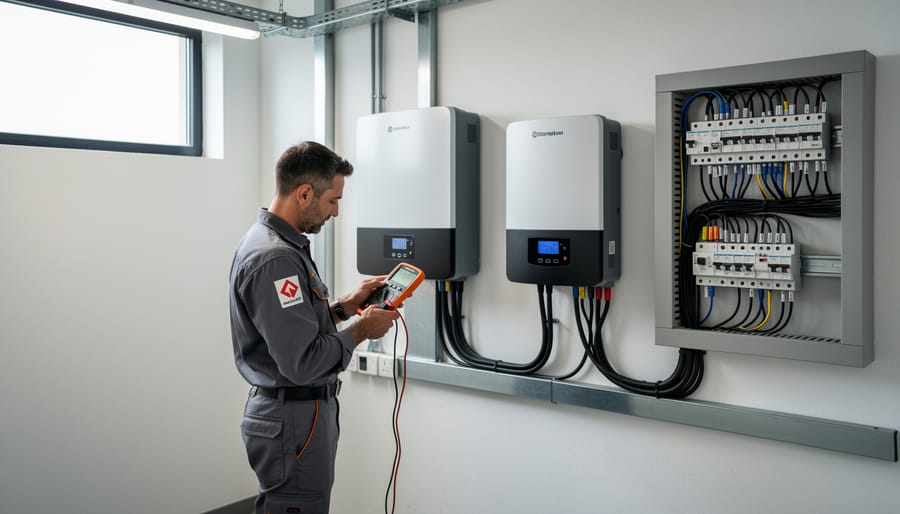
A 7kW solar system with battery backup demands a sophisticated hybrid inverter capable of managing multiple energy flows simultaneously. The core hybrid inverter requirements center on adequate power handling capacity, typically ranging from 5kW to 8kW continuous output to accommodate system sizing and peak demand scenarios.
The inverter must efficiently convert DC power from solar panels to AC electricity for immediate use while simultaneously managing battery charging and discharging cycles. Look for models with conversion efficiency ratings above 97% to minimize energy losses during operation. Essential features include built-in battery management systems that optimize charging protocols and extend battery lifespan through intelligent charge/discharge algorithms.
Power ratings should account for surge capacity, with most commercial applications requiring 150-200% overload capability for 5-10 seconds to handle equipment startup demands. Multi-MPPT (Maximum Power Point Tracking) functionality enables optimal performance across different roof orientations or shading conditions.
Integration capabilities matter significantly for commercial installations. Select inverters compatible with monitoring systems that provide real-time performance data and support grid-tie functionality for feed-in capabilities where applicable. Warranty coverage of 5-10 years typically indicates manufacturer confidence in product reliability and long-term performance stability.
Monitoring and Control Systems
Modern monitoring and control systems are essential for maximizing the performance and return on investment of 7kW solar installations with battery backup. These platforms provide real-time visibility into energy production, consumption patterns, and battery charge levels through intuitive dashboards accessible via desktop or mobile devices.
Advanced monitoring solutions enable facility managers to track system performance metrics including panel efficiency, battery health, and grid interaction data. Alert notifications identify potential issues before they impact operations, reducing downtime and maintenance costs. The data analytics capabilities help optimize battery charge and discharge cycles based on time-of-use electricity rates, ensuring maximum cost savings.
Many systems integrate automated controls that manage energy flow between solar panels, batteries, and the grid based on preset parameters. This automation reduces manual intervention while ensuring critical loads receive uninterrupted power during outages. Historical performance data allows businesses to refine their energy strategies and demonstrate ROI to stakeholders through comprehensive reporting features that document energy savings and carbon reduction achievements.
Making the Decision: Is Battery Backup Right for Your Operation?
Key Decision Factors
Selecting a 7kW solar system with battery backup requires careful evaluation of several critical factors. Your electricity rate structure plays a fundamental role in determining system value—facilities with time-of-use rates or demand charges typically achieve faster payback periods through strategic energy storage deployment. Consider the criticality of your operations: manufacturing facilities, data centers, and healthcare operations where downtime results in significant financial losses justify premium battery backup investments.
Available incentives significantly impact project economics. Federal Investment Tax Credits, state-level rebates, and accelerated depreciation schedules can reduce net system costs by 30-50%. Facility managers should conduct a comprehensive incentive analysis before finalizing specifications, as certain battery technologies or system configurations may unlock additional funding opportunities.
Your sustainability objectives warrant careful consideration. Organizations pursuing net-zero commitments or specific environmental targets often find that documented renewable energy generation supports corporate responsibility reporting and stakeholder expectations. Additionally, facilities in regions with aging grid infrastructure face increasing reliability concerns, making battery backup not merely an economic decision but a business continuity imperative. A thorough assessment of these factors, ideally conducted with experienced commercial solar professionals, ensures optimal system configuration aligned with both operational requirements and financial objectives.
Working with Professional Installers
Selecting an accredited professional installer is critical to maximizing the performance and longevity of your 7kW solar system with battery backup. Certified installers possess the technical expertise to conduct comprehensive site assessments, accounting for roof orientation, structural capacity, shading analysis, and electrical infrastructure requirements. This ensures optimal system design tailored to your facility’s specific energy consumption patterns.
Accredited installers are trained in current Australian Standards and Clean Energy Council guidelines, guaranteeing compliance with safety protocols and grid connection requirements. Their workmanship directly impacts system efficiency, with proper installation techniques preventing issues such as thermal hotspots, voltage imbalances, and inverter degradation that can reduce output by up to 25% over the system’s lifetime.
Working with qualified professionals also protects your warranty coverage. Most equipment manufacturers require installation by licensed technicians to validate product warranties, which typically extend 10-25 years. Professional installers help you avoid common mistakes that could void these protections or result in costly remediation work.
Beyond installation, established installers provide ongoing monitoring, maintenance scheduling, and technical support services essential for commercial operations. This partnership approach ensures your investment delivers consistent returns throughout its operational life while maintaining compliance with evolving regulations and grid requirements.
The integration of battery storage with a 7kW solar system represents a fundamental evolution in commercial energy strategy. Organizations that view this technology solely as a cost-reduction measure miss the broader opportunity for comprehensive energy management that delivers operational resilience, grid independence, and strategic positioning in an increasingly dynamic energy landscape.
Battery-backed solar installations enable facility managers to transcend traditional consumption patterns, actively managing when and how energy is utilized. This capability translates directly into reduced demand charges, protection against utility rate fluctuations, and uninterrupted operations during grid disturbances. The financial returns extend beyond simple electricity bill reductions to encompass risk mitigation, asset value enhancement, and alignment with sustainability mandates that increasingly influence procurement decisions and corporate partnerships.
Real-world implementations consistently demonstrate that organizations investing in professionally designed systems achieve payback periods between five and eight years while securing 25-plus years of energy cost stability. The technology has matured beyond early-adopter status into a proven infrastructure investment that delivers measurable returns.
The complexity of optimizing system configuration, battery sizing, and financial structuring requires specialized expertise. Generic approaches fail to capture site-specific opportunities related to utility rate structures, consumption patterns, and operational priorities. Professional assessment ensures that your investment delivers maximum strategic value rather than simply meeting minimum specifications.
Contact qualified solar professionals to conduct a comprehensive facility evaluation and receive customized system recommendations aligned with your organizational objectives and financial parameters.