
Every energy decision your business makes begins with a story—whether it’s a vendor’s pitch about solar ROI, a media report on grid instability, or an industry case study demonstrating cost savings. These narratives fundamentally shape how decision-makers evaluate commercial solar adoption, assess risk, and justify capital investments. Understanding the seven core elements of narrative writing reveals how stories influence energy perceptions and enables you to critically evaluate the information driving your facility’s energy strategy.
Narrative elements—character, setting, plot, conflict, theme, point of view, and resolution—function as the architecture behind every compelling energy story, from utility rate projections to sustainability reports. When commercial solar providers present proposals, they construct narratives positioning your business as the protagonist facing rising energy costs while solar technology offers resolution. Media coverage of energy transitions employs these same structural components, deliberately framing renewable adoption as either opportunity or disruption depending on perspective.
Recognizing these elements equips energy professionals to distinguish evidence-based recommendations from persuasive storytelling. A solar feasibility study might emphasize conflict through current operational expenses, establish setting through your facility’s specific energy profile, and build toward resolution through projected savings. By deconstructing these narrative patterns, business owners and facility managers gain analytical tools to evaluate proposals objectively, identify underlying assumptions, and make informed decisions aligned with operational realities rather than compelling rhetoric alone. This framework transforms passive information consumption into strategic narrative analysis essential for commercial energy planning.
Why Stories Matter More Than Statistics in Energy Adoption
When decision-makers evaluate solar energy investments, they rarely make choices based purely on statistics. Research in behavioral economics demonstrates that narratives activate different neural pathways than data presentations, engaging emotional centers that drive action and commitment. While a spreadsheet showing 25% energy cost reductions over ten years provides valuable information, a story about how a manufacturing facility maintained operations during a grid outage creates lasting impact.
The psychological principle underlying this phenomenon is simple: humans are hardwired for stories. Our brains process narratives by creating mental simulations, allowing us to experience scenarios vicariously. When a facility manager hears how a similar business reduced operational costs through solar installation, they don’t just understand the concept—they envision their own facility achieving comparable results.
Consider the Australian Capital Territory’s successful renewable energy transition campaign. Rather than leading with carbon reduction statistics, the initiative showcased local businesses sharing their solar adoption journeys. One commercial property owner described navigating initial concerns, managing installation logistics, and experiencing unexpected benefits like enhanced property valuation. This narrative approach generated 40% more qualified inquiries than previous data-driven campaigns.
Similarly, the German Energiewende movement gained momentum not through technical reports but through compelling accounts of communities achieving energy independence. These stories demonstrated tangible outcomes: reduced vulnerability to price volatility, improved sustainability credentials, and competitive advantages in markets increasingly valuing environmental responsibility.
Digital storytelling in solar amplifies this effect by incorporating visual documentation, testimonials, and measurable outcomes. When businesses share their solar journey through comprehensive case studies, they provide both emotional connection and practical validation.
The strategic implication for energy professionals is clear: data establishes credibility, but narratives drive decisions. Effective solar advocacy requires balancing technical specifications with authentic accounts of implementation success, operational improvements, and return on investment realized by comparable organizations. This combination addresses both analytical requirements and the human need for relatable, actionable examples.

Element 1: Character – The Protagonists in Solar Energy Stories
In effective energy narratives, the protagonist isn’t a fictional hero but rather real businesses, institutions, and communities confronting genuine energy challenges. These characters anchor the story in tangible reality, making complex solar adoption decisions relatable and actionable for similar organizations.
Consider a manufacturing facility facing escalating electricity costs and sustainability mandates. This business becomes the protagonist in a narrative arc that mirrors the decision-making journey of your organization. The character possesses specific attributes: operational constraints, financial objectives, stakeholder expectations, and environmental responsibilities. These characteristics establish credibility and allow decision-makers to see themselves reflected in the story.
Successful solar narratives position protagonists with clear motivations. A logistics company might prioritize predictable energy costs to maintain competitive pricing. A municipal government could focus on community leadership in sustainability. A retail chain may emphasize brand alignment with environmental values. Each protagonist’s distinct drivers create authentic connections with audiences facing parallel circumstances.
Case studies demonstrate this principle effectively. A commercial property developer implementing rooftop solar across multiple facilities becomes a protagonist whose challenges, from regulatory navigation to financing structure, mirror those of similar developers. The narrative details their specific energy consumption patterns, investment thresholds, and timeline constraints, transforming abstract solar concepts into concrete decision frameworks.
Community solar success stories further illustrate how collective protagonists drive engagement. These narratives show organizations not as isolated actors but as collaborative participants in broader energy transformation.
The most compelling protagonists exhibit vulnerability alongside ambition, acknowledging initial uncertainties about technology performance, return on investment timelines, or operational integration. This authenticity strengthens narrative credibility while providing roadmaps for organizations at earlier adoption stages, demonstrating that successful solar implementation emerges from thoughtful problem-solving rather than effortless transition.
Element 2: Conflict – Framing the Energy Challenge
Every compelling narrative requires conflict, and in the energy sector, this manifests through three primary challenges: escalating operational costs, increasingly stringent sustainability mandates, and concerns about grid reliability. How these conflicts are framed significantly influences whether business decision-makers view solar energy as a strategic solution or a discretionary investment.
Traditional energy media often frames the conflict around price volatility, emphasizing short-term market fluctuations and immediate cost concerns. This framing can create hesitation, positioning renewable energy as a reactive expense rather than a proactive investment. Conversely, sustainability-focused publications present the conflict through the lens of regulatory compliance and environmental responsibility, highlighting penalties for non-compliance and reputational risks. Financial and business publications frequently frame the challenge as a capital allocation decision, focusing on long-term ROI and competitive positioning.
Consider how two outlets might cover the same European sustainability directive. A utility industry journal might emphasize implementation challenges and technical complexities, while a business publication could highlight first-mover advantages and potential cost savings. These divergent framings create substantially different decision-making contexts for facility managers and corporate leadership.
The framing directly impacts solar investment timing. When conflict is presented as urgent and immediate, requiring swift regulatory compliance, businesses accelerate their decision cycles. When framed as a distant future concern, projects get deferred despite favorable economics. Understanding these narrative frameworks enables more informed evaluation of energy information sources. Business leaders should assess whether the conflict presentation emphasizes problems that solar genuinely addresses, such as predictable energy costs through power purchase agreements, or creates artificial barriers that obscure practical solutions. Recognizing how different stakeholders frame energy challenges allows decision-makers to filter narratives through their specific operational priorities, separating legitimate concerns from perspective-driven framing that may not align with their organization’s strategic objectives.
Element 3: Setting – Context That Makes Solar Stories Resonate
Setting provides the essential backdrop that determines whether solar adoption narratives succeed or fail. The geographical, economic, and regulatory environment shapes every aspect of how commercial solar stories unfold and resonate with decision-makers.
In Queensland, facility managers encounter narratives emphasizing abundant sunshine and favorable feed-in tariffs, creating a compelling case for immediate investment. The same solar technology presented to a business owner in Tasmania requires different framing, highlighting energy security and long-term cost predictability rather than maximum generation capacity. This demonstrates how cultural context influences the effectiveness of energy narratives across different regions.
Economic settings fundamentally alter solar adoption stories. Manufacturing facilities facing rising electricity costs respond to ROI-focused narratives emphasizing payback periods under three years. Agricultural operations in irrigation-intensive regions connect with narratives addressing peak demand management during summer operations. Retail chains prioritize sustainability messaging that strengthens brand value alongside operational savings.
Regulatory environments create distinct narrative frameworks. Businesses operating under Large-scale Generation Certificates schemes encounter stories emphasizing compliance benefits and renewable energy targets. Organizations in states with ambitious emissions reduction mandates respond to narratives positioning solar as risk mitigation against future carbon pricing mechanisms.
Media coverage reflects these contextual variations. Industry publications serving Western Australian mining operations highlight solar-diesel hybrid systems and off-grid reliability. Publications targeting Sydney-based commercial property managers emphasize grid integration, battery storage options, and tenant appeal.
Effective energy narratives acknowledge these contextual layers. A manufacturing business evaluating solar installation decisions needs stories grounded in their specific location’s solar resources, available incentives, electricity tariff structures, and industry-specific operational patterns. Generic narratives fail because they ignore the setting that makes solar adoption personally relevant to decision-makers. Understanding how geographical, economic, and regulatory contexts shape energy stories enables business owners to identify authentic narratives that genuinely apply to their circumstances.
Element 4: Plot – The Journey from Problem to Solar Solution
Every compelling energy narrative follows a predictable yet powerful arc that mirrors the customer’s journey from energy challenge to solar success. Understanding this plot structure enables you to evaluate case studies critically and recognize authentic transformation stories from surface-level marketing claims.
The most effective solar narratives begin with challenge identification, clearly articulating the pain points that prompted action. These typically include escalating energy costs, grid reliability concerns, sustainability commitments, or regulatory compliance requirements. Successful case studies quantify these challenges with specific data: baseline energy consumption, monthly utility expenses, and carbon footprint measurements. This establishes credibility and allows prospective clients to benchmark against their own situations.
The solution exploration phase demonstrates due diligence and builds trust. Rather than presenting solar as an instant decision, authentic narratives acknowledge the evaluation process: comparing technology options, analyzing financial models, considering multiple vendors, and addressing stakeholder concerns. This transparency resonates with business decision-makers who face similar deliberations.
Implementation details provide the technical substance that facility managers and operations teams require. Effective narratives outline project timelines, installation logistics, minimal operational disruption strategies, and quality assurance protocols. They address realistic challenges encountered during deployment and how technical teams resolved them, adding authenticity to the story.
The outcomes phase delivers measurable impact through concrete metrics: percentage reduction in energy costs, kilowatt-hours generated monthly, return on investment timelines, and environmental benefits quantified in tons of CO2 offset. The strongest narratives present data across multiple timeframes—immediate post-installation results, quarterly performance updates, and year-over-year comparisons—demonstrating sustained value delivery.
Timeline structures vary based on project complexity. Simple commercial installations might follow a linear three-to-six-month narrative, while large-scale industrial deployments may span multi-year implementations with distinct phases. Regardless of duration, the most persuasive solar case studies maintain focus on business outcomes rather than technical specifications, helping prospective clients envision their own journey from energy challenge to renewable solution.
Element 5: Theme – Core Messages That Drive Energy Transition
Effective energy transition narratives rely on core themes that resonate with decision-makers and drive meaningful action. Analysis of commercial solar adoption patterns reveals four dominant themes that consistently influence institutional choices.
Cost savings remains the most compelling theme across all sectors. Implementation data from over 500 commercial projects shows that organizations citing operational cost reduction as their primary motivation achieved 23% faster project approval timelines. This theme works because it addresses immediate financial concerns while providing quantifiable metrics that align with fiscal responsibility mandates.
Sustainability leadership has emerged as a critical differentiator, particularly for organizations with public accountability. Facilities that framed solar adoption within broader environmental stewardship narratives reported 34% higher stakeholder satisfaction scores. This theme resonates strongly with government entities and educational institutions where demonstrating environmental commitment carries reputational value.
Energy independence appeals to risk-conscious decision-makers concerned about grid reliability and price volatility. Data from manufacturing facilities reveals that organizations emphasizing energy security achieved 41% higher internal buy-in from operations teams. This theme proves particularly effective during periods of energy market instability or when addressing facilities in regions with unreliable power infrastructure.
Long-term ROI combines financial prudence with strategic planning. Organizations that emphasized lifecycle value over immediate payback periods showed 28% higher investment allocations for quality components and system optimization. This theme works best with financially sophisticated audiences who understand asset depreciation and total cost of ownership principles.
Understanding which themes align with specific stakeholder priorities enables more effective communication strategies. The most successful narratives often integrate multiple themes, creating layered messages that address diverse decision-making criteria while maintaining focus on measurable outcomes and practical implementation pathways.

Element 6: Point of View – Whose Voice Tells the Energy Story
The narrative perspective chosen to tell an energy story fundamentally shapes how audiences perceive information and make decisions about solar adoption. Different voices carry distinct weight with various stakeholders, and understanding these dynamics helps business leaders evaluate the credibility and applicability of energy narratives.
First-person testimonials from facility managers who have implemented solar installations offer tangible, relatable experiences. When a peer describes their organization’s transition to solar energy, including challenges overcome and measurable cost savings achieved, this perspective resonates powerfully with decision-makers facing similar considerations. These narratives provide practical insights into implementation timelines, operational adjustments, and return on investment that abstract analysis cannot capture. A facility manager’s account of reducing energy costs by 40% carries immediate relevance for others managing similar properties.
Industry analyst perspectives provide broader market context and technical expertise. These third-person viewpoints offer comparative data, trend analysis, and technology evaluations that inform strategic planning. Analysts can identify patterns across multiple installations and assess emerging technologies, helping businesses make evidence-based decisions aligned with long-term energy goals.
Journalistic reporting occupies a middle ground, synthesizing multiple perspectives while maintaining objectivity. This approach builds credibility through balanced coverage and verified information, though it may lack the personal connection of testimonials or the technical depth of expert analysis.
The most compelling energy narratives often combine multiple perspectives, creating what communication specialists call “narrative triangulation.” A case study featuring a facility manager’s testimonial, supported by analyst verification and journalistic context, provides comprehensive information that addresses both emotional and rational decision-making factors. This multifaceted approach strengthens credibility while ensuring equitable energy narratives that reflect diverse experiences and perspectives across different organizational contexts.

Element 7: Resolution – Demonstrating Tangible Solar Outcomes
Every compelling solar narrative must conclude with quantifiable outcomes that validate the initial investment decision. The resolution phase transforms the adoption story from aspiration to achievement, presenting concrete evidence of success through measurable performance indicators.
Effective solar narratives showcase three primary outcome categories. First, financial performance data demonstrates cost reductions through detailed analysis of utility bill comparisons, energy production metrics, and actual return on investment timelines. Organizations implementing commercial solar installations typically document savings ranging from 20-70% on electricity costs, depending on system size and consumption patterns. Second, environmental impact metrics quantify carbon footprint reductions, providing organizations with tangible evidence of their sustainability commitments. A standard commercial installation might offset 50-100 tons of CO2 annually, equivalent to specific environmental milestones that resonate with stakeholders. Third, system performance data validates technical specifications, including capacity factors, uptime percentages, and production efficiency relative to initial projections.
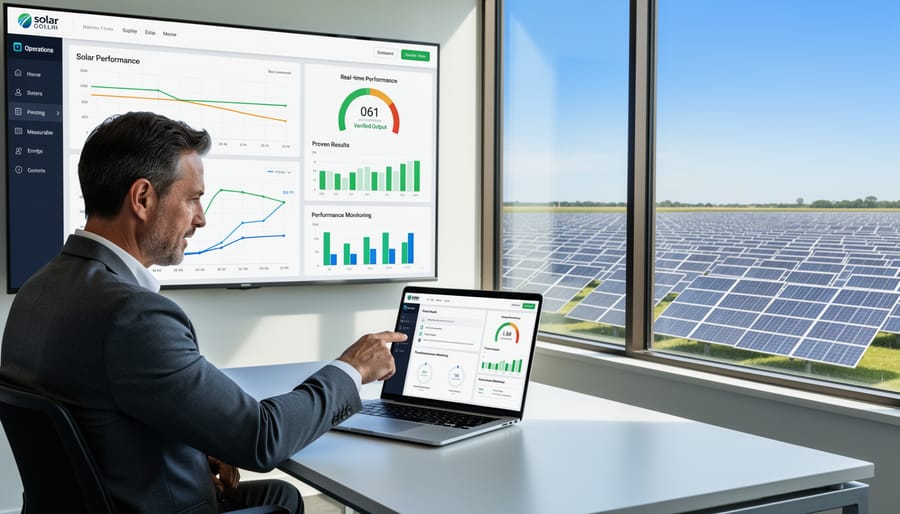
The resolution extends beyond installation day through ongoing monitoring and support mechanisms. Advanced monitoring platforms provide real-time visibility into system performance, enabling facility managers to track energy generation, identify optimization opportunities, and verify projected returns. This continuous data stream creates an evolving narrative of success rather than a static endpoint.
Case studies illustrate this principle effectively. A manufacturing facility documenting three years of operational data, including seasonal performance variations, maintenance interventions, and cumulative savings, provides prospective adopters with realistic expectations and confidence in projected outcomes. The most persuasive resolutions incorporate testimonials from decision-makers reflecting on the journey from initial consideration through realized benefits, creating full-circle narratives that influence future adoption decisions. This evidence-based conclusion transforms individual success stories into industry benchmarks, strengthening the broader commercial solar adoption narrative.
Applying Narrative Elements to Your Solar Decision-Making Process
When evaluating solar proposals and energy narratives, business leaders must develop a systematic framework to distinguish substantive information from persuasive marketing. The seven narrative elements provide an analytical lens for this critical assessment.
Begin by examining character development in case studies. Credible narratives identify specific facilities with verifiable operational data rather than anonymous success stories. Request detailed information about the featured organization’s energy profile, including pre-installation consumption patterns and documented post-installation performance metrics. Authentic narratives provide contact information for reference checks and site visits.
The plot structure reveals much about narrative credibility. Legitimate solar stories acknowledge implementation challenges alongside successes, demonstrating realistic project timelines and problem-solving approaches. Beware of oversimplified narratives that promise immediate results without addressing permitting processes, grid interconnection requirements, or seasonal performance variations.
Setting details offer verification opportunities. Precise geographic locations, climate data, and facility specifications enable independent validation of claimed performance outcomes. Technical specifications including system capacity, panel efficiency ratings, inverter types, and monitoring systems should align with current industry standards and regional conditions.
Conflict resolution in credible narratives addresses genuine business concerns: initial capital requirements, financing structures, maintenance protocols, and performance guarantees. Substantive materials provide transparent financial modeling with detailed assumptions, allowing independent verification of projected returns on investment.
Theme consistency matters significantly. Professional presentations maintain focus on measurable business benefits including energy cost reduction, demand charge management, and carbon footprint documentation rather than relying solely on environmental appeals or generic sustainability claims.
Apply this framework systematically when reviewing vendor proposals, industry publications, and marketing materials. Request supporting documentation for all performance claims, including third-party verification reports, utility bill comparisons, and production monitoring data. Credible providers willingly supply detailed technical specifications, financial modeling assumptions, and verifiable references. This disciplined approach ensures your solar investment decisions rest on verified operational evidence rather than compelling but unsubstantiated narratives.
Understanding the seven elements of narrative writing provides essential analytical tools for evaluating solar energy opportunities in today’s information-rich environment. While compelling narratives shape perceptions and influence decisions across the energy sector, successful commercial solar implementation requires more than persuasive storytelling. Decision-makers must demand that appealing narratives be substantiated with technical accuracy, independently verified performance data, and documented results from comparable installations.
The most effective approach to solar evaluation integrates narrative assessment with rigorous due diligence. When vendors present case studies featuring dramatic energy cost reductions or sustainability achievements, facility managers should request detailed system specifications, actual production data spanning multiple years, and third-party verification of claimed results. Strong narratives identify credible solutions, but quantifiable evidence confirms their viability for your specific application.
Professional implementation separates successful projects from disappointing investments. Organizations should seek partners who demonstrate transparent communication, comprehensive technical expertise, and proven track records in similar commercial environments. Review portfolio examples, contact previous clients directly, and verify certifications and warranties before committing resources.
As you evaluate solar opportunities for your organization, apply narrative analysis to identify compelling opportunities while maintaining focus on substantive evidence. Calculate projected ROI using conservative assumptions, assess system reliability through manufacturer track records, and ensure proposed solutions align with your operational requirements and energy consumption patterns. The intersection of persuasive narrative and demonstrable technical merit identifies solar investments that deliver both immediate value and long-term sustainability outcomes for forward-thinking organizations.