
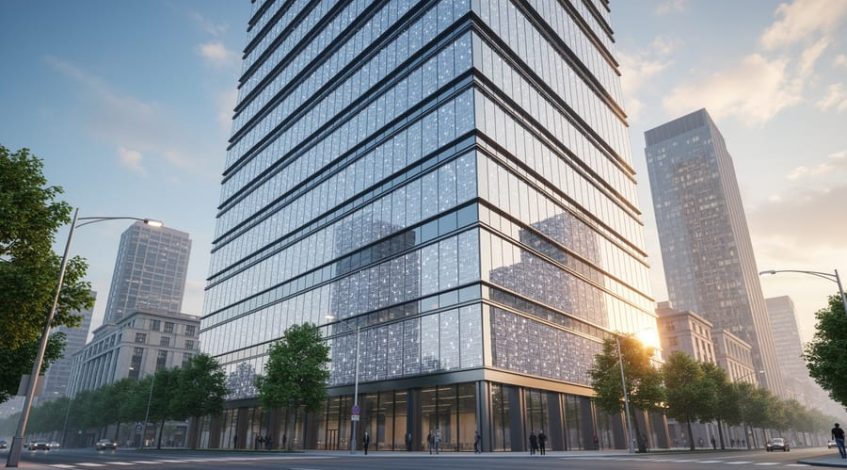
The buildings surrounding you consume approximately 40% of global energy—but their roofs, facades, and windows represent untapped power generation opportunities worth billions in energy savings. Building-integrated solar panels transform structural elements into electricity-generating assets, eliminating the need for separate mounting systems while maintaining architectural integrity.
Unlike conventional rooftop installations that add solar panels to existing structures, building integrated photovoltaics (BIPV) replace traditional building materials—glass curtain walls become transparent solar panels, roof tiles generate electricity while protecting against weather, and exterior cladding doubles as an energy source. This dual functionality reduces total project costs by 15-30% compared to installing both premium building materials and separate solar arrays.
The technology addresses three critical business challenges simultaneously. First, it maximizes limited urban real estate by utilizing vertical surfaces that traditional solar ignores, increasing generation capacity by 200-400% in dense commercial districts. Second, BIPV systems qualify for both renewable energy incentives and building material tax deductions, creating compound financial benefits that accelerate ROI to 6-9 years in most markets. Third, the seamless aesthetic integration satisfies stringent architectural requirements in heritage districts and premium developments where conventional solar panels face regulatory rejection.
Major commercial properties worldwide already demonstrate BIPV’s viability. The Edge building in Amsterdam generates surplus electricity through facade-integrated photovoltaics, while Copenhagen’s International School features 12,000 colored solar panels as its primary exterior material. For existing structures, solar retrofitting offers pathway to similar benefits without complete reconstruction.
Decision-makers require concrete data on performance metrics, installation timelines, and maintenance obligations before committing capital to BIPV projects.
What Makes Building-Integrated Photovoltaics Different
The Dual-Function Advantage
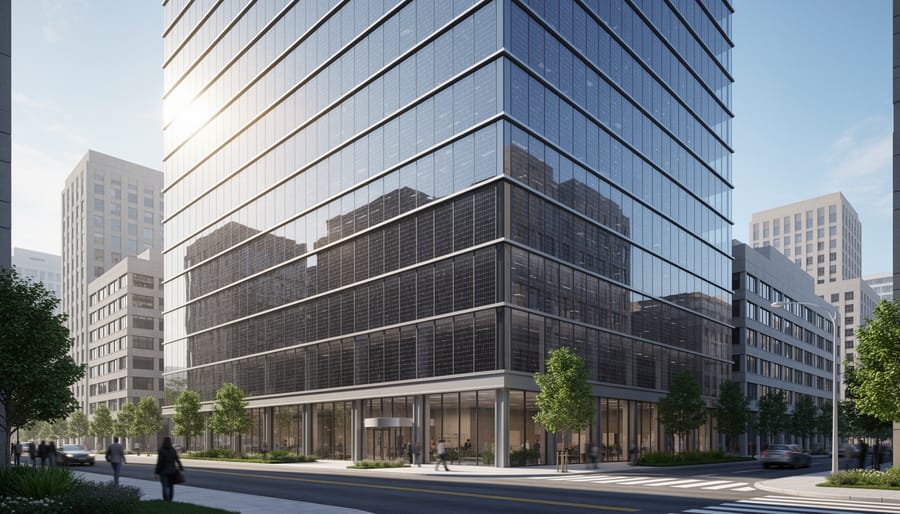
Building Integrated Photovoltaics represents a fundamental shift in how organizations approach both construction materials and energy generation. Unlike traditional solar installations that require additional mounting systems and structural support, BIPV products serve a dual purpose by simultaneously functioning as the building envelope while producing electricity.
When properly implemented, BIPV replaces conventional architectural components including roofing materials, facade cladding, skylights, and window glazing. This substitution creates immediate cost offsets that significantly improve project economics. Rather than purchasing standard building materials and then adding solar panels as a separate line item, facility managers can consolidate these expenses into a single integrated solution.
Consider a commercial building facade renovation: conventional curtain wall systems can cost between $400 and $700 per square meter installed. BIPV facade systems, while initially ranging from $600 to $1,000 per square meter, eliminate the need for separate cladding materials and generate revenue through electricity production over their 25 to 30-year lifespan. This approach transforms what would traditionally be a passive building surface into an active energy asset.
The financial advantage extends beyond material costs. BIPV installations typically reduce labor expenses by eliminating redundant installation processes. A single team can install the building envelope and power generation system simultaneously, compressing project timelines and reducing overall construction costs. For organizations evaluating long-term facility investments, this dual-function approach delivers measurable returns while supporting sustainability objectives and potentially qualifying for energy efficiency incentives.
BIPV Applications for Commercial Properties
Commercial properties offer numerous strategic locations for BIPV integration, each presenting distinct advantages for facility managers seeking to optimize energy generation while maintaining architectural integrity.
Solar facades represent one of the most visible BIPV applications, transforming vertical building surfaces into productive energy-generating assets. These systems prove particularly valuable for high-rise structures with limited roof space, where vertical surfaces can capture significant solar exposure throughout the day. Modern solar facade technologies integrate seamlessly with curtain wall systems, offering aesthetic flexibility while contributing to overall energy requirements.
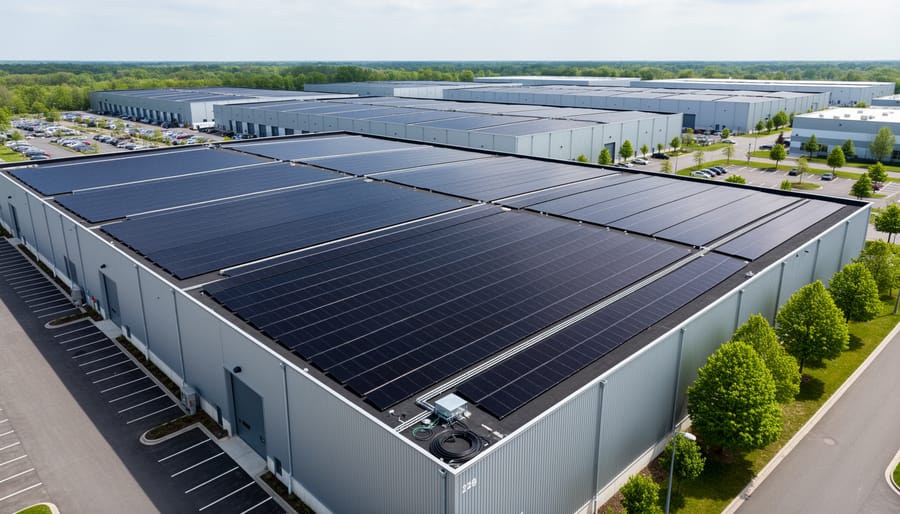
Photovoltaic roofing systems replace traditional roofing materials with solar-generating alternatives, serving the dual function of weather protection and power production. These solutions eliminate the need for separate mounting systems, reducing installation complexity and long-term maintenance requirements. Commercial warehouses, distribution centers, and retail facilities with expansive roof areas frequently achieve substantial energy offsets through this application.
Solar glazing incorporates semi-transparent photovoltaic cells into windows and skylights, allowing natural light transmission while generating electricity. This technology particularly benefits office buildings where daylighting remains a priority, offering controllable shading that can reduce cooling loads while producing power.
Canopies and parking structures provide excellent BIPV opportunities, converting otherwise underutilized spaces into revenue-generating assets. Solar carports protect vehicles while generating substantial electricity, with installations at corporate campuses and retail centers demonstrating strong return on investment. These structures often serve as highly visible demonstrations of organizational commitment to sustainability while providing tangible energy cost reductions and potential electric vehicle charging infrastructure support.
Financial Performance: The Real Return on BIPV Investment
Initial Investment vs. Long-Term Savings
Understanding the financial landscape of building integrated photovoltaics requires examining both immediate expenditures and long-term economic benefits. BIPV systems typically command a premium of 15-30% over conventional solar installations, with commercial projects ranging from $200 to $400 per square foot depending on application complexity and technology choice.
However, this initial investment comparison shifts significantly when accounting for displaced construction materials. BIPV facades eliminate traditional cladding costs, while photovoltaic glazing replaces conventional curtain wall systems. For a typical commercial building, these material offsets can reduce net BIPV costs by 20-40%, narrowing the gap with standard construction approaches.
Commercial installations generally achieve payback periods between 8 and 15 years, influenced by factors including local electricity rates, available incentives, and building energy consumption patterns. Properties in high-cost electricity markets or regions with robust solar incentive programs often experience accelerated returns. Federal Investment Tax Credits currently provide 30% cost recovery, substantially improving project economics.
Consider the case of a mid-sized office development in California that integrated BIPV cladding across 12,000 square feet of south-facing facade. The installation generated 180 kW of capacity, offsetting $42,000 in annual energy costs while eliminating $85,000 in traditional facade materials. With federal incentives applied, the project achieved a 10-year payback with projected 25-year savings exceeding $850,000.
Beyond direct energy savings, BIPV installations deliver value through enhanced property marketability, improved tenant attraction, and alignment with corporate sustainability mandates, factors increasingly important in competitive commercial real estate markets.
Incentives and Tax Benefits for Commercial BIPV
Commercial BIPV projects benefit from a robust framework of financial incentives designed to accelerate renewable energy adoption across Europe and individual member states. Understanding these programs is essential for accurate return on investment calculations and project feasibility assessments.
At the European Union level, the Renewable Energy Directive sets binding targets that translate into various support mechanisms for BIPV installations. The EU Emissions Trading System indirectly supports BIPV through carbon pricing, making renewable energy increasingly competitive. Additionally, the InvestEU programme provides financing and technical assistance for sustainable infrastructure projects, including commercial BIPV systems.
National incentive structures vary significantly across member states. Germany offers feed-in tariffs through the Renewable Energy Sources Act, guaranteeing fixed compensation rates for electricity fed into the grid. France provides tax credits covering up to 30 percent of installation costs for eligible commercial properties. The Netherlands implements the SDE++ subsidy scheme, compensating for the difference between renewable energy generation costs and market electricity prices over a 15-year period.
Tax benefits represent another crucial financial consideration. Many countries allow accelerated depreciation for BIPV installations, enabling businesses to recover costs more quickly. Value-added tax reductions on BIPV materials and installation services apply in several jurisdictions, lowering upfront investment requirements.
Renewable Energy Certificates provide ongoing revenue streams, allowing building owners to monetize the environmental attributes of their BIPV generation. These tradable certificates create additional income beyond direct energy savings, further improving project economics. Facility managers should consult with energy advisors to identify all applicable incentives and optimize their financial structure accordingly.
Design Flexibility and Aesthetic Integration
Customization Options for Commercial Buildings
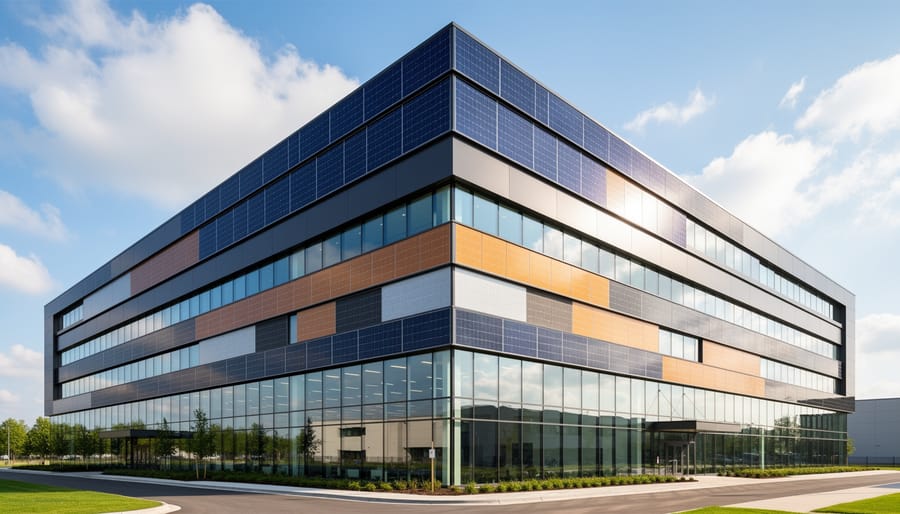
Modern BIPV systems offer extensive customization options that enable architects and facility managers to integrate solar technology without compromising design vision. Color selection has advanced significantly beyond traditional blue-black panels, with manufacturers now offering terracotta, bronze, grey, white, and custom-matched hues that complement building facades and blend seamlessly with surrounding materials.
Transparency levels represent another critical customization dimension, particularly for glass applications. Semi-transparent BIPV glazing allows natural light penetration while generating electricity, making it ideal for atriums, skylights, and curtain walls. Transparency can be adjusted from 10% to 70%, enabling designers to balance daylighting requirements with energy generation goals.
Texture options extend from smooth glass finishes to textured surfaces that mimic traditional building materials. Some BIPV products replicate slate, tile, or metal roofing appearances, allowing commercial properties to maintain aesthetic consistency while meeting sustainability objectives. This approach aligns with nature-inspired solar architecture principles that prioritize visual harmony.
Form factors have expanded beyond rectangular panels to include curved modules, custom shapes, and flexible thin-film applications. This versatility enables BIPV integration into complex architectural geometries, from barrel-vaulted roofs to undulating facades. For example, the Copenhagen International School features 12,000 colored BIPV panels arranged in a distinctive pattern, demonstrating how customization transforms functional technology into architectural statement pieces while generating 300 MWh annually.
Preserving Brand Identity and Building Character
Modern businesses face a unique challenge when implementing BIPV: maintaining their established visual identity while adopting sustainable technology. Fortunately, today’s BIPV solutions offer remarkable design flexibility that allows organizations to preserve—and even enhance—their brand aesthetics.
Contemporary BIPV products are available in various colors, textures, and finishes that can complement existing architectural styles. Glass facades can incorporate semi-transparent photovoltaic cells that maintain natural light transmission while generating power, seamlessly integrating with corporate headquarters or retail environments. Custom-colored solar panels can match brand palettes, ensuring consistency across facility exteriors.
Leading corporations have successfully leveraged BIPV installations as visible demonstrations of their sustainability commitments. A notable example includes major technology companies incorporating solar glass curtain walls that simultaneously showcase innovation and environmental responsibility. These installations become architectural features rather than add-ons, reinforcing brand positioning as forward-thinking and environmentally conscious.
Integration with daylighting design strategies further enhances both functionality and aesthetic appeal. Facility managers working with experienced solar consultants can develop customized BIPV solutions that align with corporate design standards while delivering measurable energy performance. This strategic approach transforms renewable energy infrastructure from a purely functional necessity into a powerful brand statement that resonates with environmentally conscious stakeholders and clients.
Technical Considerations for Commercial BIPV Installation
Structural and Engineering Requirements
Building integrated photovoltaics must meet rigorous structural and engineering standards that extend beyond conventional construction requirements. Unlike rack-mounted systems, BIPV components function as both energy generators and essential building elements, necessitating careful attention to multiple performance criteria.
Load-bearing capacity represents a primary consideration, particularly for rooftop and facade applications. BIPV modules must withstand wind loads, snow accumulation, and seismic forces while maintaining structural integrity throughout their 25-30 year lifespan. Engineering assessments should account for dead loads from the modules themselves and live loads from maintenance activities. For retrofit projects, existing structural capacity may require reinforcement to accommodate the additional weight and stress patterns.
Waterproofing integration demands meticulous planning, as BIPV installations create numerous penetration points in the building envelope. Proper flashing, drainage systems, and weatherproof sealing prevent moisture infiltration that could compromise both energy production and building durability. Manufacturers now offer integrated mounting systems with tested waterproofing assemblies, reducing installation complexity and failure risks.
Thermal performance affects both energy efficiency and module longevity. BIPV installations must facilitate adequate ventilation to prevent heat buildup, which can reduce photovoltaic efficiency by 10-25 percent. Strategic air gaps behind modules allow natural convection cooling while contributing to the building’s thermal management strategy.
Real-world implementations demonstrate these principles effectively. The Edge building in Amsterdam incorporates BIPV panels engineered to meet stringent European wind load standards while maintaining aesthetic consistency, achieving net-zero energy performance through comprehensive envelope integration. Successful BIPV deployment requires coordination between solar engineers, structural consultants, and architects from initial design phases through construction completion.
Working with Accredited BIPV Installers
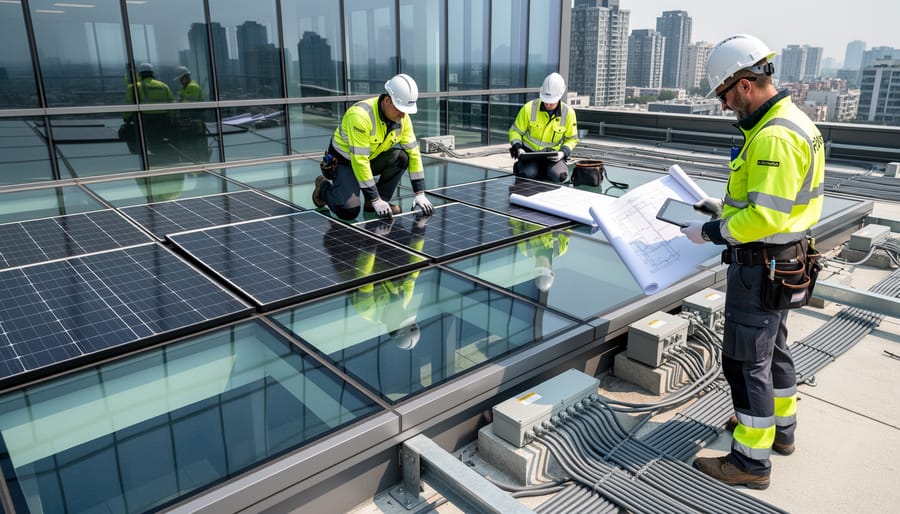
Building integrated photovoltaics represent a significant investment in infrastructure, making professional installation essential for optimal performance and long-term reliability. Unlike conventional solar panels, BIPV systems integrate directly into building envelopes, requiring specialized expertise in both photovoltaic technology and building construction principles.
When selecting a BIPV installer, verify their credentials include certification from recognized bodies such as the North American Board of Certified Energy Practitioners (NABCEP) and specific BIPV training from manufacturers. Experienced installers should demonstrate a portfolio of completed projects similar in scope to yours, with verifiable performance data. Request references from facility managers who can speak to post-installation support and system reliability.
The complexity of BIPV installation demands collaboration between electrical contractors, structural engineers, and waterproofing specialists. Your installer should coordinate these disciplines seamlessly while ensuring compliance with building codes and utility interconnection requirements. They must also provide comprehensive commissioning that validates both energy generation and building envelope integrity.
Professional installation extends beyond initial deployment. Establish a monitoring agreement that tracks system performance in real-time, identifying issues before they impact energy production. Advanced monitoring platforms provide analytics on energy generation, weather correlation, and component health. For instance, a commercial development in Portland reported identifying and resolving a 12 percent performance degradation within 48 hours through proactive monitoring, preventing significant revenue loss.
Quality installers offer performance guarantees backed by workmanship warranties, typically 10 years minimum, alongside manufacturer equipment warranties. This protection safeguards your investment while ensuring accountability for system performance throughout its operational lifetime.
Real-World BIPV Applications: Case Studies
Commercial Office Building Integration
The Edge Amsterdam, a multi-tenant office building completed in 2014, demonstrates BIPV’s commercial viability through its comprehensive facade integration. This 40,000-square-meter development incorporated 6,500 square meters of photovoltaic panels within its glass curtain wall system, generating approximately 700,000 kWh annually. This output covers roughly 15% of the building’s total energy consumption, reducing operational costs by approximately $85,000 annually at current electricity rates.
The building’s south-facing facade features semi-transparent thin-film solar cells embedded between double-glazed panels, maintaining natural light transmission while generating power. This design approach eliminated the aesthetic compromise typically associated with retrofitted solar installations, presenting a uniform, contemporary appearance that enhanced property value. Construction costs increased by 8% compared to conventional facades, but the 12-year payback period aligned favorably with commercial property investment horizons.
Performance monitoring revealed consistent year-round energy generation, with peak output during spring and early summer months. The building management team reported that BIPV integration contributed significantly to achieving BREEAM Outstanding certification, the highest sustainability rating available. This certification directly impacted tenant acquisition, with the building maintaining 98% occupancy rates and commanding 15% premium lease rates compared to comparable non-sustainable office space in the district.
The Edge project illustrates how BIPV technology influences urban solar energy economics while delivering measurable returns for commercial property stakeholders. Building management continues to track performance data, providing valuable benchmarks for future commercial BIPV implementations across European markets.
Industrial and Government Facility Implementation
The U.S. General Services Administration’s Federal Center South Building 1202 in Seattle demonstrates the substantial impact of BIPV technology at scale. This government facility integrated over 14,000 square feet of photovoltaic modules into its façade and canopy systems, generating approximately 58,000 kilowatt-hours annually while reducing the building’s energy costs by 18 percent.
The installation showcases BIPV’s dual functionality in large facilities. The photovoltaic panels serve as both architectural cladding and renewable energy generators, eliminating the need for separate rooftop arrays while maintaining the building’s professional aesthetic. This integration approach reduced overall construction costs by 12 percent compared to installing traditional façade materials plus conventional solar panels.
Industrial applications have yielded equally impressive results. A manufacturing facility in California installed BIPV skylights across 35,000 square feet of roof space, achieving a peak output of 1.2 megawatts. The semi-transparent panels provide natural daylighting to the production floor while generating electricity, reducing both energy consumption and lighting costs. The facility documented a return on investment timeline of 7.2 years, accounting for federal tax incentives and state rebates.
Performance monitoring from these installations reveals BIPV systems maintain 92 to 95 percent efficiency compared to traditional solar panels when properly designed. The key factors include adequate ventilation behind panels, optimal tilt angles, and strategic placement to maximize sun exposure throughout operational hours. These large-scale implementations demonstrate that BIPV technology scales effectively for substantial energy demands while meeting stringent government and industrial facility requirements.
Is BIPV Right for Your Commercial Property?
Ideal Candidates for BIPV Installation
BIPV installations deliver optimal value in specific building contexts and operational scenarios. New construction and major renovation projects represent the most cost-effective opportunities, as integrating photovoltaic components during initial design eliminates redundant material costs and labor expenses associated with traditional roofing or facades.
Commercial buildings with large, unobstructed roof surfaces facing south (in the Northern Hemisphere) or north (in the Southern Hemisphere) achieve maximum energy generation efficiency. Office buildings, manufacturing facilities, warehouses, and retail centers with high daytime electricity consumption align particularly well with BIPV’s peak production hours, reducing reliance on grid power during expensive demand periods.
Government buildings and educational institutions seeking sustainability certifications and long-term operational savings benefit substantially from BIPV integration. These entities typically maintain ownership for extended periods, allowing them to realize full return on investment over the system’s 25-30 year lifespan.
Multi-story buildings in urban environments can leverage BIPV facades to capture vertical solar exposure, transforming previously underutilized surfaces into energy-generating assets. This proves especially valuable where horizontal roof space is limited or shared among multiple tenants.
Organizations committed to corporate sustainability goals, net-zero targets, or LEED certification find BIPV provides both functional energy generation and visible demonstration of environmental responsibility, enhancing brand reputation while reducing operating expenses.
When Traditional Solar Makes More Sense
While building integrated photovoltaics offer compelling aesthetic and design advantages, traditional rack-mounted solar systems remain the more practical choice in several scenarios. Existing buildings with structurally sound roofs and no near-term renovation plans typically achieve better ROI with conventional solar panels, which cost 30-50% less per watt installed than BIPV alternatives. The proven reliability and straightforward maintenance of rack-mounted systems make them ideal for facilities prioritizing immediate energy cost reduction over architectural integration.
Organizations with limited capital budgets benefit from traditional solar’s lower upfront investment and faster payback periods, typically 5-7 years compared to BIPV’s 8-12 years. Industrial facilities, warehouses, and agricultural operations where aesthetics are secondary considerations can maximize energy generation per dollar invested through conventional installations. Additionally, properties in regions with mature solar installer networks and established permitting processes for traditional systems experience smoother project execution and competitive pricing.
Traditional solar also provides greater flexibility for future expansion or system upgrades, as panels can be easily repositioned or replaced without affecting building envelope integrity. For decision-makers focused purely on energy production efficiency and cost-effectiveness rather than architectural innovation, conventional photovoltaic systems deliver proven performance with minimal complexity.
Building integrated photovoltaics represent a fundamental shift in how commercial properties approach construction and energy infrastructure. By eliminating the traditional separation between building envelope and power generation, BIPV creates structures that are inherently productive assets rather than passive consumers of electricity. For business owners and facility managers, this convergence offers compelling financial advantages through reduced material costs, lower installation expenses, and immediate energy savings that extend over decades.
The technology has matured beyond experimental applications to become a proven solution for forward-thinking organizations. Real-world implementations across office buildings, manufacturing facilities, and institutional campuses demonstrate consistent performance and measurable returns on investment. When evaluated against the total cost of ownership, BIPV systems frequently outperform conventional building materials paired with separate solar installations, particularly when factoring in aesthetic value, reduced maintenance requirements, and enhanced property valuations.
Government officials and industry leaders evaluating sustainability initiatives will find BIPV particularly valuable for meeting renewable energy mandates while simultaneously modernizing aging infrastructure. The dual functionality addresses multiple organizational objectives with a single investment, streamlining procurement processes and accelerating project timelines.
However, successful BIPV implementation requires careful consideration of site-specific factors including structural requirements, local climate conditions, utility interconnection policies, and applicable incentive programs. Each commercial property presents unique opportunities and constraints that demand professional assessment.
To determine whether building integrated photovoltaics align with your specific facility requirements and financial objectives, consultation with qualified solar professionals is essential. These specialists can conduct comprehensive site evaluations, perform detailed financial modeling, and develop implementation strategies tailored to your organization’s goals. Taking this decisive step positions your property at the forefront of sustainable commercial development while securing long-term energy cost stability.