
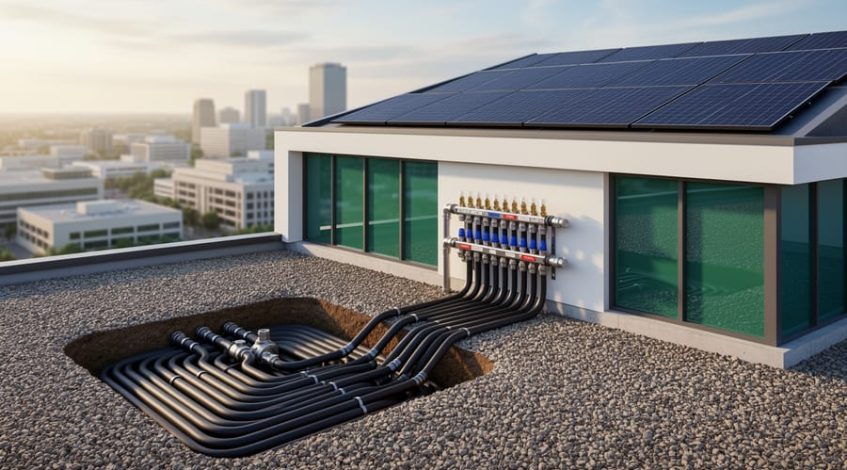
Closed-loop geothermal systems circulate a heat-transfer fluid through sealed underground pipes, extracting consistent thermal energy regardless of weather conditions or time of day. Unlike traditional geothermal installations that require specific geological features or create environmental disruptions, these systems work virtually anywhere by leveraging the earth’s constant subsurface temperature of 50-60°F to provide heating in winter and cooling in summer.
The technology delivers measurable operational advantages for commercial facilities. Organizations implementing closed-loop geothermal reduce HVAC energy consumption by 40-70% compared to conventional systems, with typical payback periods of 5-10 years depending on facility size and regional energy costs. The Minneapolis Convention Center demonstrated this potential by installing a 6.3-million-square-foot system that eliminates 7.5 million pounds of carbon dioxide annually while reducing heating and cooling expenses by $200,000 each year.
Decision-makers evaluating renewable energy portfolios increasingly view closed-loop geothermal as complementary to solar installations rather than competing alternatives. While solar addresses electrical demand during daylight hours, geothermal provides consistent thermal management 24/7 with minimal surface footprint. This dual approach optimizes capital investment across different energy requirements, particularly for facilities with substantial heating and cooling loads alongside electrical consumption.
The implementation pathway involves three critical assessments: geological surveying to determine optimal loop depth and configuration, load calculation to size the system appropriately for building requirements, and financial modeling that incorporates available incentives from federal tax credits and state renewable energy programs. Understanding these fundamentals enables informed decisions about whether closed-loop geothermal aligns with your facility’s operational priorities and sustainability objectives.
What Are Closed-Loop Geothermal Systems?
The Technology Behind Closed-Loop Systems
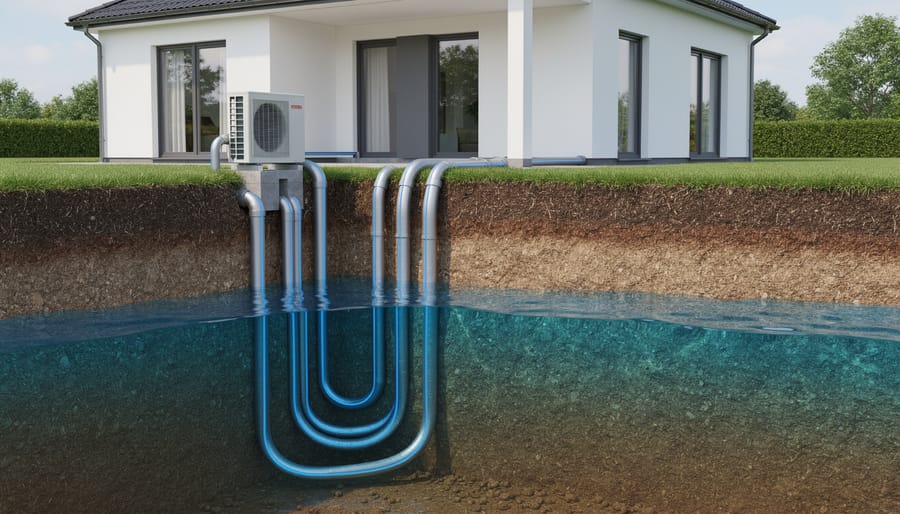
Closed-loop geothermal systems operate on elegant engineering principles that make them remarkably efficient and reliable. Unlike open-loop systems that draw water from aquifers, closed-loop configurations circulate a heat-transfer fluid through sealed, continuous piping networks installed underground. This fluid, typically water mixed with antifreeze, never contacts groundwater, eliminating contamination risks and regulatory complications.
The core mechanism relies on thermal conductivity—the earth’s ability to maintain relatively constant temperatures below the frost line, typically 45-75°F depending on location. During winter, the circulating fluid absorbs heat from the warmer ground and carries it to the surface, where a heat pump concentrates this energy for space heating. In summer, the process reverses: the system extracts heat from buildings and deposits it into the cooler earth, providing efficient air conditioning.
The sealed piping configuration typically employs high-density polyethylene pipes, chosen for durability, corrosion resistance, and thermal efficiency. These pipes are installed either vertically in boreholes 150-400 feet deep or horizontally in trenches 4-6 feet below grade, depending on available land area and geological conditions.
What makes this technology particularly attractive for facility managers is its compatibility with other renewable systems. Similar to waste heat recovery technologies, closed-loop geothermal maximizes energy efficiency by leveraging existing thermal gradients. The systems achieve coefficient of performance ratings between 3.0 and 5.0, meaning they deliver three to five units of heating or cooling for every unit of electricity consumed—a compelling return on investment for operations-minded decision-makers.
Key Differences from Traditional Geothermal
Unlike traditional open-loop geothermal systems that extract and discharge groundwater, closed-loop systems circulate fluid through sealed pipes underground, never making contact with the earth’s water supply. This fundamental distinction delivers several operational advantages.
From an environmental perspective, closed-loop systems eliminate the risk of groundwater contamination and require no water rights or discharge permits, simplifying regulatory compliance considerably. Traditional systems can introduce chemical additives or altered-temperature water back into aquifers, raising environmental concerns that closed-loop technology inherently avoids.
Maintenance requirements differ significantly as well. Open-loop systems often face scaling, corrosion, and clogging from minerals in groundwater, necessitating frequent pump replacements and well maintenance. Closed-loop configurations minimize these issues by using controlled fluid mixtures, typically reducing maintenance costs by 30-40% over the system’s lifespan.
Scalability represents another key differentiator. Traditional geothermal depends on adequate groundwater availability and flow rates, limiting geographic applicability. Closed-loop systems function effectively across diverse geological conditions, from urban commercial properties to remote industrial facilities, making them viable in locations where conventional systems cannot operate. This flexibility enables businesses to implement geothermal solutions alongside other renewable technologies, creating comprehensive energy portfolios that maximize efficiency and minimize environmental impact.
Why Commercial Facilities Are Taking Notice
Cost Predictability and Long-Term Savings
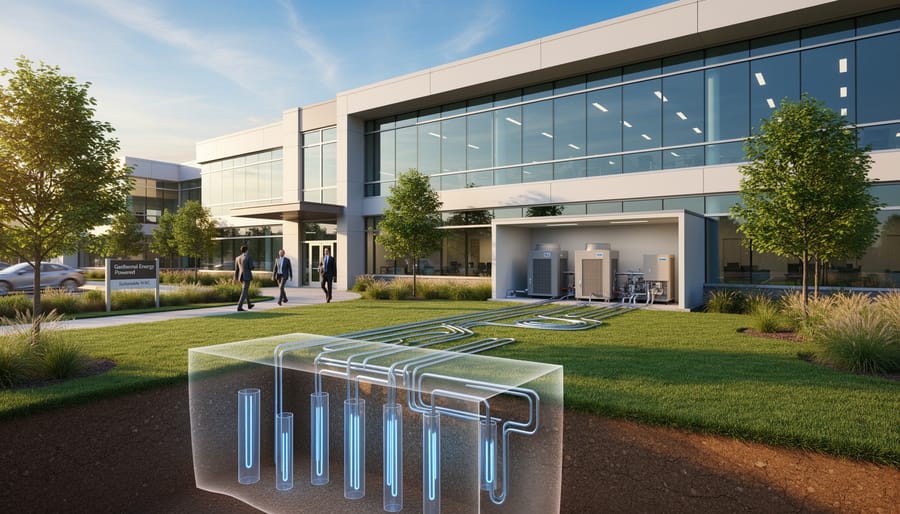
Closed-loop geothermal systems deliver significant cost advantages through predictable operational expenses and protection against energy price volatility. Unlike conventional HVAC systems that rely on fluctuating electricity or fossil fuel markets, geothermal operations maintain consistent energy costs year after year. The ground temperature remains stable regardless of external market conditions, insulating facility managers from the price spikes that regularly impact traditional heating and cooling budgets.
Operational cost savings typically range from 30-60% compared to conventional systems, with many commercial installations achieving payback periods of 5-10 years. These systems require minimal maintenance due to fewer mechanical components and no outdoor condensing units exposed to weather extremes. The ground loop itself carries warranties extending 50 years, while heat pump equipment generally operates reliably for 20-25 years, far exceeding the 10-15 year lifespan of traditional HVAC units.
Lifecycle economic analysis consistently favors geothermal investment when evaluated over 20-30 year periods. A manufacturing facility in Ohio documented $180,000 in annual energy savings after transitioning to a closed-loop system, recovering their initial investment in seven years while securing predictable operational costs through 2045. Similarly, a municipal building complex in Minnesota reduced HVAC expenses by 48% annually while eliminating exposure to natural gas price fluctuations.
The financial predictability enables more accurate long-term budgeting and improves return on investment calculations for facility upgrades. When combined with available tax incentives and utility rebates, the total cost of ownership becomes increasingly competitive, making geothermal systems a strategic financial decision rather than merely an environmental choice.
Minimal Environmental Footprint
Closed loop geothermal systems deliver measurable environmental advantages that directly support organizational sustainability commitments. These systems produce zero direct emissions during operation and eliminate the combustion byproducts associated with conventional heating and cooling methods. The closed loop design prevents groundwater contamination and requires no water consumption for operation, addressing growing concerns about water resource management.
From an ESG reporting perspective, facilities utilizing closed loop geothermal typically reduce their carbon footprint by 40-70% compared to conventional HVAC systems. The system’s underground infrastructure occupies minimal surface area, preserving land for other uses while maintaining visual aesthetics—a consideration for corporate campuses and public facilities. Material requirements remain modest, with installation primarily involving high-density polyethylene piping that maintains integrity for 50-100 years, reducing replacement cycles and associated waste.
The technology’s efficiency translates to reduced electricity demand from the grid, lessening strain on power infrastructure and decreasing reliance on fossil fuel generation during peak periods. For organizations tracking Scope 2 emissions, this represents quantifiable progress toward climate goals. Additionally, the quiet operation and absence of outdoor condensing units eliminate noise pollution and reduce urban heat island effects in dense commercial districts.
Regulatory and Incentive Landscape
Government support for closed-loop geothermal systems has strengthened considerably in recent years, creating favorable conditions for commercial adoption. The federal Investment Tax Credit (ITC) currently allows businesses to claim up to 30% of qualified geothermal installation costs, significantly reducing initial capital requirements. This credit applies to both new construction and retrofit projects, making it accessible for diverse facility types.
Many states offer additional incentives through rebate programs, property tax exemptions, and accelerated depreciation schedules. The Modified Accelerated Cost Recovery System (MACRS) enables businesses to depreciate geothermal systems over five years, enhancing cash flow and return on investment. Several municipalities have streamlined permitting processes specifically for geothermal installations, reducing administrative barriers and project timelines.
Regulatory frameworks increasingly recognize closed-loop systems as low-impact renewable energy solutions, often exempting them from more stringent environmental reviews required for open-loop configurations. Business owners should consult the Database of State Incentives for Renewables and Efficiency (DSIRE) and engage with energy consultants to identify location-specific opportunities that can reduce project costs by 40-50% when incentives are strategically combined.
Real-World Applications Across Industries
Manufacturing and Industrial Facilities
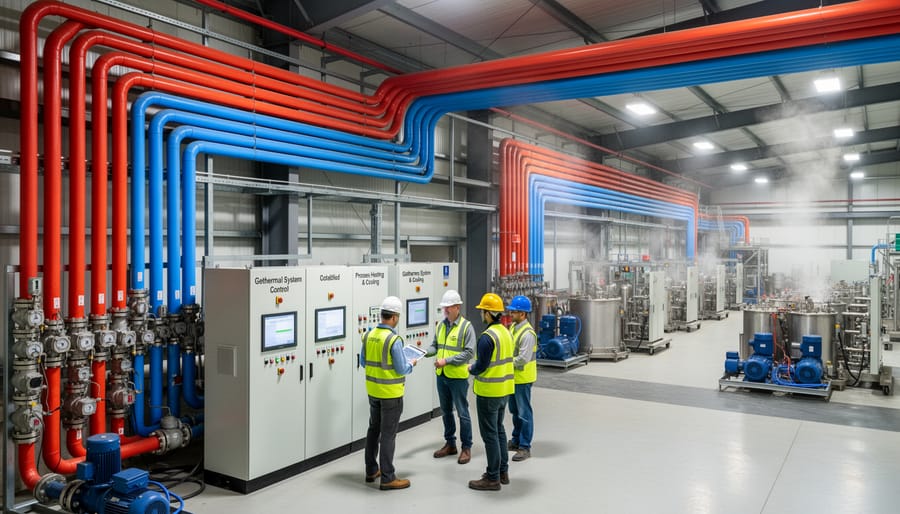
Manufacturing and industrial facilities increasingly rely on closed-loop geothermal systems to meet demanding process heating and cooling requirements while reducing operational costs. These systems excel in applications requiring consistent temperature control, from food processing to pharmaceutical manufacturing.
In automotive manufacturing, closed-loop systems maintain precise temperature conditions for paint curing and parts production. A Midwest automotive supplier implemented a geothermal system that reduced heating and cooling costs by 42% while maintaining the exacting specifications required for component manufacturing. The system’s reliability eliminated temperature fluctuations that previously resulted in production delays.
Breweries and distilleries represent particularly effective applications, as these facilities require significant cooling for fermentation and heating for sterilization. A Colorado craft brewery integrated a closed-loop system that handles both thermal loads simultaneously, achieving a three-year payback period through energy savings and utility incentives.
Data centers benefit substantially from geothermal cooling, which provides consistent heat rejection regardless of outdoor temperatures. Industrial laundries, textile manufacturers, and chemical processing plants also leverage these systems for process water heating, steam generation, and climate control. The predictable operating costs and minimal maintenance requirements make closed-loop geothermal particularly attractive for facilities seeking long-term operational efficiency and carbon footprint reduction.
Commercial Real Estate and Office Buildings
Closed-loop geothermal systems deliver measurable benefits for commercial real estate portfolios, with large office complexes and business parks achieving significant operational savings. These systems typically reduce heating and cooling costs by 40-60% compared to conventional HVAC solutions while maintaining consistent indoor climate control across expansive floor plans.
Mixed-use developments particularly benefit from the scalability of closed-loop configurations. A notable implementation at a 500,000-square-foot corporate campus in Chicago demonstrated a 52% reduction in annual energy costs, with the system paying for itself in 7.2 years through utility savings alone. The campus also reduced carbon emissions by 1,200 metric tons annually, strengthening its sustainability profile.
Business parks employing horizontal closed-loop systems in available land areas report operational reliability exceeding 98%, with minimal maintenance requirements. For high-density urban office towers with limited surface area, vertical bore installations prove effective, though require higher initial capital investment. Performance monitoring from occupied buildings shows average coefficient of performance ratios between 3.5 and 4.5, meaning these systems deliver 3.5 to 4.5 units of heating or cooling energy for every unit of electricity consumed.
Facility managers should evaluate soil conditions, building load profiles, and available space during feasibility assessments to optimize system design and maximize return on investment.
Government and Institutional Buildings
Government and public institutions are leading the adoption of closed-loop geothermal systems, demonstrating their viability for large-scale applications while achieving significant operational savings. Schools, hospitals, and municipal buildings present ideal candidates for this technology due to their substantial energy demands, long-term operational horizons, and commitment to sustainability goals.
Educational facilities across North America have successfully implemented closed-loop systems, with many reporting 40-60% reductions in heating and cooling costs compared to conventional HVAC systems. The Fort Wayne Community Schools district in Indiana installed geothermal systems across multiple facilities, documenting annual energy savings exceeding $1.2 million while eliminating over 15,000 tons of carbon emissions annually. These installations often integrate with energy-positive building design strategies, creating comprehensive renewable energy solutions.
Healthcare facilities benefit particularly from the system’s reliability and consistent temperature control, critical for patient care environments. Ball Memorial Hospital in Indiana operates one of the largest institutional geothermal installations, utilizing over 3,700 bore holes to condition 1.2 million square feet of space with documented ROI achieved within seven years.
Municipal buildings provide highly visible demonstrations of governmental commitment to sustainable infrastructure. The Environmental Protection Agency’s headquarters in Kansas features a 48-ton geothermal system that has performed reliably for over two decades, validating the technology’s longevity. These public sector implementations establish benchmarks for performance data, enabling private sector decision-makers to evaluate feasibility with confidence based on documented operational histories.
Enhanced Geothermal Innovations Expanding Viability
Breakthrough Technologies Reducing Installation Costs
Recent technological innovations have dramatically transformed the economic landscape for closed-loop geothermal installations, making them increasingly viable for mid-sized commercial facilities. Advanced directional drilling techniques, originally developed for the oil and gas sector, now enable precise horizontal boring that reduces surface disruption and installation time by up to 40 percent. This translates directly to lower labor costs and minimal operational downtime during construction.
Modular heat pump systems represent another significant advancement, offering scalable configurations that align with varied building loads without the oversizing penalties that historically plagued smaller commercial projects. These units feature variable-speed compressors and intelligent controls that optimize performance across diverse operating conditions, improving seasonal efficiency ratings by 15-25 percent compared to previous generations.
Thermal conductivity testing methods have also evolved, with rapid assessment protocols replacing lengthy geological surveys. These streamlined evaluations reduce pre-installation engineering costs while maintaining design accuracy. When combined with prefabricated loop components and standardized connection systems, total installation expenses for commercial applications have decreased by 20-30 percent since 2020. Several manufacturing facilities and office complexes in the Midwest have reported payback periods shortened to 6-8 years, compared to historical averages exceeding 10 years, making closed-loop geothermal increasingly competitive with conventional HVAC alternatives.
Geographic Expansion Beyond Traditional Hot Zones
Traditional geothermal energy required proximity to volcanic regions or tectonic plate boundaries, limiting deployment to specific geographic areas. Closed-loop systems have fundamentally changed this constraint by eliminating the need for naturally occurring hydrothermal reservoirs. These advanced systems can tap into the Earth’s baseline heat available virtually anywhere by drilling deep enough into the subsurface.
Recent projects demonstrate this expanded viability. A commercial facility in Munich, Germany—far from any volcanic activity—successfully implemented a closed-loop system reaching depths of 3,000 meters to achieve consistent heating and cooling. Similarly, a manufacturing plant in Alberta, Canada has reduced energy costs by 40% using closed-loop technology in a region previously dependent on fossil fuels for thermal energy.
The technology works by circulating fluid through sealed underground pipes that exchange heat with surrounding rock formations. Unlike open-loop systems requiring specific geology and water resources, closed-loop configurations adapt to various subsurface conditions. This flexibility enables deployment across diverse climates and geological settings, from urban business districts to remote industrial sites. For facility managers evaluating renewable options, this geographic independence represents a strategic advantage in long-term energy planning and reduces dependence on location-specific resources.
Integration with Solar and Hybrid Renewable Systems
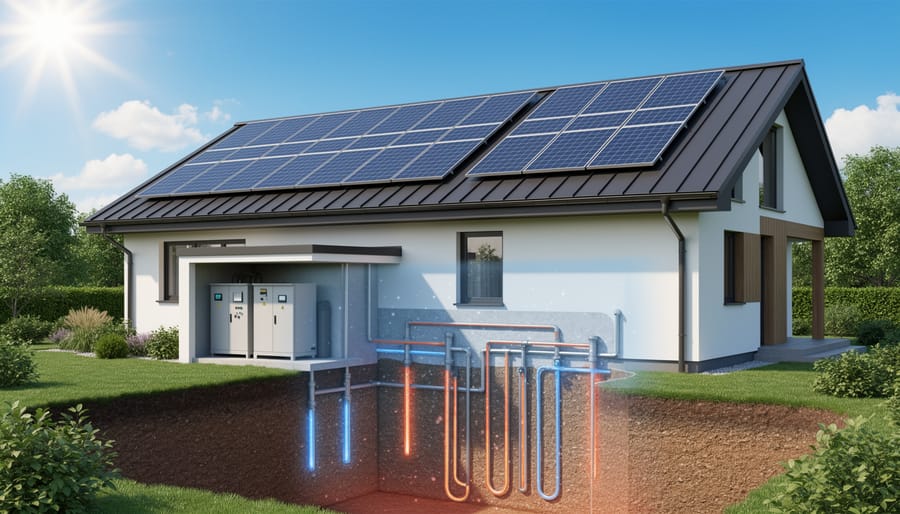
Why Solar and Geothermal Work Better Together
Integrating solar photovoltaic systems with closed-loop geothermal creates a comprehensive energy solution that addresses the limitations of each technology independently. This hybrid approach delivers consistent, efficient performance throughout varying operational demands and seasonal conditions.
The primary synergy emerges from complementary operational patterns. Solar energy generation peaks during daylight hours and summer months, while geothermal systems provide stable baseload heating and cooling year-round. When combined, solar can power geothermal heat pumps during peak production periods, reducing grid dependency and operational costs. Excess solar generation can be stored as thermal energy within the ground loop system, effectively using the earth as a battery for later retrieval.
From a practical implementation standpoint, facilities installing geothermal infrastructure can simultaneously deploy solar arrays with minimal additional site disruption. The geothermal system’s reduced electrical demand—typically 25-50% lower than conventional HVAC—means appropriately sized solar installations can often meet most or all energy requirements for climate control.
This integrated approach significantly improves return on investment metrics. Commercial facilities report achieving energy independence for heating and cooling operations within 7-12 years, compared to 10-15 years for standalone systems. The combination also enhances resilience, providing multiple energy pathways that maintain critical operations during grid disruptions while maximizing renewable energy utilization and minimizing carbon footprint across all operational scenarios.
Maximizing Energy Independence
Closed-loop geothermal systems significantly enhance energy independence when integrated with complementary renewable technologies. By combining geothermal heating and cooling with solar power generation and energy storage solutions, commercial facilities can reduce grid dependence by up to 70 percent while maintaining operational continuity during power disruptions.
For critical operations like data centers, hospitals, and manufacturing facilities, this resilience proves invaluable. The geothermal system provides consistent baseline heating and cooling regardless of external conditions, while smart energy management platforms optimize energy flow between sources. During grid outages, facilities continue operations seamlessly, protecting revenue streams and maintaining service commitments.
A pharmaceutical distribution center in Melbourne demonstrated this advantage during the 2022 grid stress events, maintaining temperature-controlled environments without interruption while competitors faced costly product losses. The facility’s hybrid system delivered consistent performance while reducing annual energy costs by 58 percent. This combination of reliability and efficiency positions forward-thinking organizations to weather energy market volatility while demonstrating environmental leadership to stakeholders and customers.
Implementation Considerations for Decision-Makers
Site Assessment and Feasibility Analysis
Before investing in a closed-loop geothermal system, property owners must conduct a thorough site assessment to ensure technical and financial viability. The evaluation begins with geological surveys to determine subsurface conditions, including soil composition, rock formations, and thermal conductivity. Properties with consistent ground temperatures between 45-75°F at depths of 10-300 feet typically offer optimal performance.
Available land area is a critical consideration. Horizontal loop systems require approximately 1,500-3,000 square feet per ton of heating and cooling capacity, while vertical systems need less surface space but involve deeper drilling. Water table levels and local drilling regulations also impact system design and installation costs.
The building’s existing HVAC infrastructure, energy consumption patterns, and heating-to-cooling ratio should be analyzed to right-size the system. A comprehensive feasibility study examines utility rates, available incentives, and projected energy savings to calculate return on investment. Most commercial installations achieve payback periods of 5-10 years, with systems lasting 25-50 years. Engaging qualified geothermal engineers early in the assessment process ensures accurate cost projections and identifies potential site constraints before significant capital commitment.
Project Timeline and Installation Process
Implementing a closed-loop geothermal system requires careful planning and realistic timeline expectations. The complete process typically spans 3-6 months from initial assessment to full operation, though project complexity and site conditions can extend this timeframe.
The planning phase (4-6 weeks) includes comprehensive site assessment, geological surveys, and system design specifications. Facility managers should anticipate permitting requirements that vary by jurisdiction, typically requiring 2-4 weeks for approval. Working with experienced contractors familiar with local regulations expedites this process considerably.
Installation represents the most intensive phase, generally requiring 4-8 weeks depending on system size and loop configuration. Drilling operations for vertical systems typically complete within 1-2 weeks per borehole, while horizontal installations may progress faster on suitable sites with adequate land area. The ground loop installation is followed by mechanical system integration and connection to existing HVAC infrastructure.
Commissioning and testing (1-2 weeks) ensures optimal performance before full operation begins. During this phase, technicians verify proper refrigerant charges, flow rates, and control sequences. Business owners should budget contingency time for unexpected geological conditions or weather delays. Early engagement with qualified contractors and proactive permit coordination helps maintain project schedules and controls costs effectively.
Selecting the Right Partners and Contractors
Selecting qualified geothermal system providers requires the same rigorous evaluation standards applied to major renewable energy investments. Begin by verifying contractor credentials, including relevant licensing, industry certifications from organizations like the International Ground Source Heat Pump Association, and specific experience with closed-loop installations in your climate zone. Request detailed case studies demonstrating successful commercial-scale projects, complete with performance data and client references. Evaluate the provider’s technical capabilities in geological assessment, system sizing, and integration with existing infrastructure. Financial stability matters significantly, as warranties and long-term service agreements depend on the company’s ongoing viability. Compare comprehensive proposals that include site analysis results, equipment specifications, projected performance metrics, and total lifecycle costs. Established contractors should provide transparent timelines, detailed maintenance protocols, and clear performance guarantees. Just as with solar installations, prioritize providers who offer end-to-end project management, from initial feasibility studies through commissioning and staff training, ensuring seamless implementation of your geothermal investment.
Closed-loop geothermal systems represent a significant opportunity for organizations committed to long-term sustainability and energy cost reduction. As demonstrated through numerous commercial and institutional applications, these systems deliver reliable heating and cooling performance while minimizing environmental impact and operational expenses. However, the most strategic approach to renewable energy adoption recognizes that no single technology provides a complete solution.
Forward-thinking organizations are increasingly implementing integrated renewable energy portfolios that combine geothermal systems with solar photovoltaic installations, energy storage solutions, and smart building controls. This comprehensive strategy maximizes efficiency gains, accelerates return on investment, and provides greater energy independence. The synergy between geothermal’s constant baseline performance and solar energy’s peak daytime generation creates a robust, resilient energy infrastructure that outperforms either technology in isolation.
The economic case for this integrated approach continues strengthening as equipment costs decline, financing options expand, and energy prices remain volatile. Organizations that evaluate multiple renewable technologies simultaneously can optimize system sizing, identify complementary benefits, and develop phased implementation plans aligned with capital budgets and operational priorities.
Now is the time to assess how closed-loop geothermal systems, potentially combined with solar solutions, can transform your facility’s energy profile. Conduct a comprehensive energy audit, engage qualified renewable energy consultants, and explore available incentives. The transition to clean energy requires strategic planning, but the environmental and financial benefits position your organization for sustained competitive advantage in an increasingly sustainability-focused marketplace.