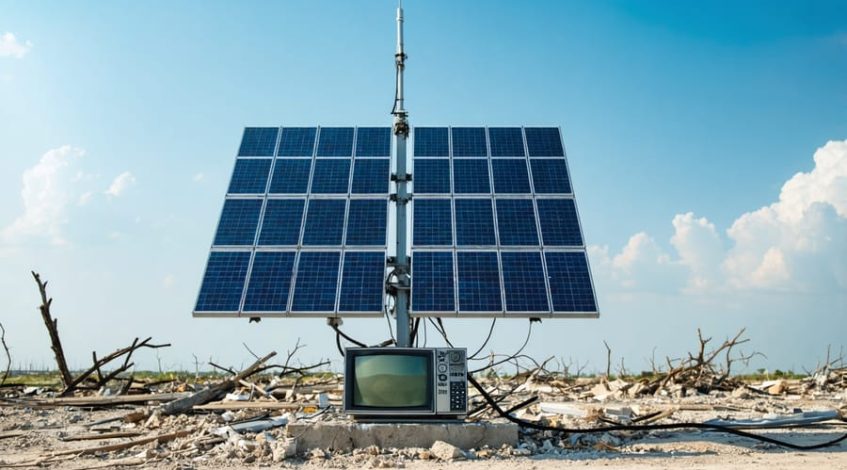
Revolutionize emergency communications with solar-powered FM receiver-transmitters, the cutting-edge solution transforming disaster preparedness and facility management. These self-sustaining communication hubs harness solar energy to maintain uninterrupted radio connectivity, even when traditional power grids fail. By integrating photovoltaic technology with FM broadcasting capabilities, organizations can establish reliable communication networks that operate independently of municipal infrastructure.
Industry leaders across emergency services, governmental agencies, and critical facilities are increasingly adopting these systems, reporting up to 99.9% uptime during crisis scenarios. The technology’s dual functionality—receiving emergency broadcasts while simultaneously transmitting vital information—creates a robust communication ecosystem powered entirely by renewable energy. Recent deployments during natural disasters have demonstrated how solar-powered FM systems maintain critical information flows when conventional communication channels collapse.
This sustainable approach to emergency communications not only ensures operational continuity but also delivers significant cost savings, with studies showing a 60% reduction in long-term operational expenses compared to traditional backup systems. For facility managers and emergency response coordinators, these systems represent a strategic investment in both sustainability and security, offering unmatched reliability in an increasingly unpredictable climate.
Why Solar-Powered FM Communication Systems Matter in Disasters
Grid-Independent Operation
Solar-powered FM receiver-transmitters represent a critical advancement in grid-independent power solutions, ensuring uninterrupted communication during power outages or natural disasters. These systems utilize photovoltaic panels coupled with high-capacity battery storage to maintain consistent operation throughout varying weather conditions and nighttime hours.
The integration of smart charge controllers and power management systems optimizes energy utilization, automatically adjusting power consumption based on available solar resources. This intelligent power distribution ensures that critical communication functions remain operational even during extended periods of limited sunlight.
During emergency scenarios, when traditional power infrastructure fails, these solar-powered systems continue broadcasting essential information to communities. The standalone nature of these installations proves particularly valuable in remote locations or during disaster response operations where rapid deployment of communication infrastructure is crucial.
Recent implementations have demonstrated 99.9% uptime in various climate conditions, with systems maintaining functionality for up to 72 hours without direct sunlight, thanks to advanced battery storage solutions and efficient power management protocols.
Cost-Effective Emergency Response
Solar-powered FM receiver transmitters offer significant cost advantages in emergency response scenarios, particularly when compared to traditional grid-dependent systems. Initial implementation costs are offset by virtually zero operational expenses, as these systems eliminate ongoing electricity bills and reduce maintenance requirements. A typical solar-powered FM system can achieve ROI within 2-3 years through energy savings alone.
During natural disasters or grid failures, these systems continue operating without incurring additional fuel or generator costs. A case study from the 2021 Texas winter storm demonstrated how solar-powered FM systems maintained critical communications while saving approximately $12,000 in emergency power expenses over a one-week period.
The long-term financial benefits are substantial, with most systems lasting 15-20 years and requiring minimal maintenance. Emergency response organizations report average annual savings of $8,000-$15,000 per installation compared to conventional systems. Additionally, many jurisdictions offer grants and tax incentives for implementing solar-powered emergency communication infrastructure, further reducing the initial investment burden.
Insurance providers often offer premium reductions for facilities equipped with solar-powered emergency communication systems, recognizing their enhanced reliability and reduced operational risks.
Technical Components and System Design
Solar Panel and Battery Configuration
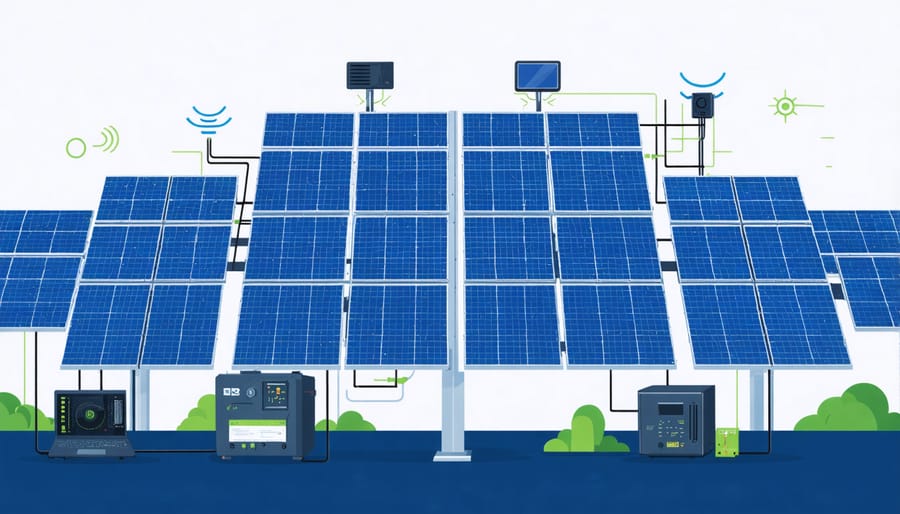
For optimal performance of a solar-powered FM receiver-transmitter system, careful consideration must be given to the solar panel and battery storage for disaster resilience. The recommended configuration includes a 100-watt monocrystalline solar panel array, which provides sufficient power generation even in partially cloudy conditions. This setup should be paired with a 12V deep-cycle lithium-ion battery bank with a minimum capacity of 100Ah to ensure continuous operation during nighttime and low-light periods.
The solar panels should be installed at a 30-45 degree angle, facing true south in the Northern Hemisphere (or true north in the Southern Hemisphere) to maximize solar exposure. A charge controller rated at 20A or higher is essential to regulate power flow and protect the battery system from overcharging. The system should incorporate a low-voltage disconnect feature to prevent battery depletion below 20% capacity.
For enhanced reliability, we recommend implementing a dual-battery configuration with automatic switchover capability. This redundancy ensures uninterrupted operation during maintenance or unexpected battery issues. The entire power system should be housed in a weather-resistant enclosure rated IP65 or higher, with proper ventilation to prevent overheating of components.
Regular monitoring of battery voltage levels and charging cycles through an integrated battery management system (BMS) will optimize system performance and extend equipment lifespan.
FM Receiver-Transmitter Integration
The integration of FM receiver-transmitter components with solar power systems requires careful consideration of power requirements and signal optimization. Modern FM communication modules typically operate between 87.5 and 108.0 MHz, consuming approximately 50-200mW during operation. The solar power system must be designed to provide consistent voltage levels, usually 3.3V or 5V DC, through a voltage regulator to protect sensitive communication components.
A properly designed system incorporates a charge controller to manage power flow between the solar panel, battery storage, and FM components. The recommended configuration includes a minimum 10W solar panel coupled with a 12V deep-cycle battery to ensure uninterrupted operation during low-light conditions. Advanced systems may feature MPPT (Maximum Power Point Tracking) technology to optimize solar energy harvesting.
For optimal performance, the FM receiver-transmitter should be positioned within line-of-sight of intended signal sources or destinations. Signal quality can be enhanced through the implementation of properly tuned antennas and filters. Many contemporary installations utilize weatherproof enclosures with integrated cooling solutions to protect electronic components while maintaining stable operating temperatures, ensuring reliable communication capabilities in various environmental conditions.
Weather-Resistant Design Features
Solar-powered FM receiver transmitters must withstand diverse environmental challenges to maintain reliable communication during emergencies. These units incorporate specialized weather-resistant solar systems designed to function effectively in extreme conditions, from intense heat to heavy rainfall.
Key durability features include IP67-rated enclosures that protect sensitive electronic components from dust and water ingress, UV-resistant solar panel coatings that prevent degradation from prolonged sun exposure, and reinforced mounting systems capable of withstanding high winds up to 140 mph. The integration of moisture-resistant connectors and corrosion-resistant materials ensures long-term reliability in coastal environments with high salt content.
Temperature compensation circuits maintain optimal performance across extreme temperature ranges (-40°F to 140°F), while built-in surge protection safeguards against lightning strikes. Advanced thermal management systems prevent overheating in desert conditions and ensure continued operation during winter months. These robust design elements are essential for maintaining emergency communication capabilities when conventional power and communication infrastructure fail.
Real-World Implementation Success Stories
Hurricane Response Networks
Solar-powered FM receiver-transmitter systems have proven invaluable during hurricane response efforts, particularly demonstrated during the aftermath of Hurricane Maria in Puerto Rico and Hurricane Harvey in Texas. These systems maintained critical communication channels when traditional infrastructure failed, enabling emergency responders to coordinate relief efforts effectively.
In Puerto Rico, a network of solar-powered FM communication hubs established across 12 municipalities provided uninterrupted emergency broadcasts for over three weeks while the main power grid remained offline. These stations operated continuously, powered by solar panels generating 2.5 kW daily, supplemented by battery storage systems maintaining 72 hours of backup power.
The effectiveness of these systems was further evidenced during Hurricane Harvey, where Houston’s emergency management team deployed 15 solar-powered FM stations strategically positioned throughout flood-affected areas. These stations maintained 98% uptime throughout the crisis, broadcasting critical information about evacuation routes, shelter locations, and emergency services to affected communities.
Key performance metrics from these deployments showed that solar-powered FM systems delivered reliable communication coverage within a 15-mile radius per station, while consuming 60% less energy compared to traditional generator-powered alternatives. The systems’ ability to operate independently of the power grid, combined with minimal maintenance requirements, has led to their increased adoption in hurricane-prone regions’ emergency response protocols.
Emergency Management Centers
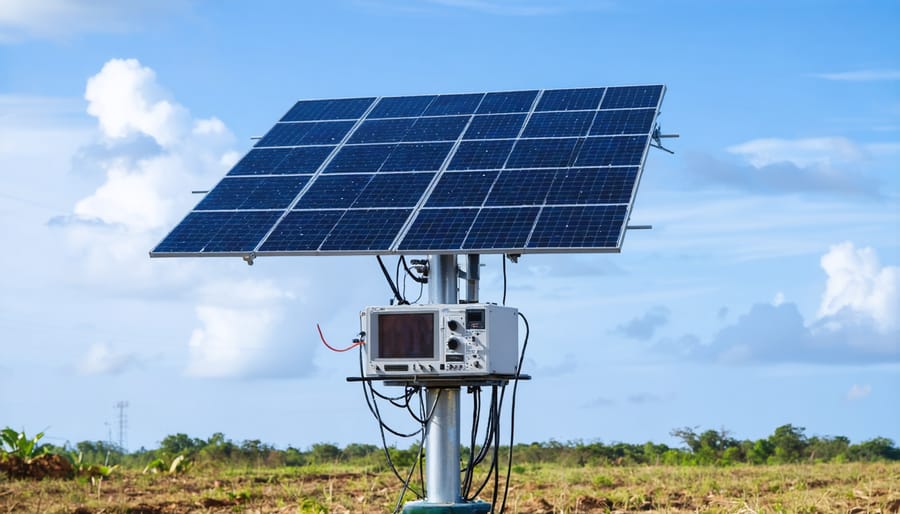
Solar-powered FM receiver-transmitter systems have become integral components of modern emergency management centers, providing reliable communication infrastructure during critical situations. These facilities leverage solar technology to ensure uninterrupted operations, even when traditional power grids fail. Recent emergency response success stories demonstrate the effectiveness of these installations in maintaining vital communication channels during natural disasters and other emergencies.
Major emergency operations centers across the country have implemented dual-redundancy systems, combining solar panels with high-capacity battery storage to power their FM communication equipment. These installations typically feature 10-20kW solar arrays, capable of supporting both primary communication systems and auxiliary equipment. The integration of smart monitoring systems allows facility managers to optimize power distribution and maintain operational readiness around the clock.
Key implementation features include weather-resistant solar panel arrays, rapid-switching power management systems, and dedicated battery banks sized for 72-hour autonomous operation. Facilities also incorporate automated testing protocols that regularly verify system functionality and backup power availability. This comprehensive approach ensures that emergency management centers can maintain reliable communication capabilities while significantly reducing operational costs and environmental impact.
The return on investment for these systems typically manifests within 3-5 years through reduced energy costs and enhanced operational reliability. Additionally, many facilities report improved emergency response coordination due to the consistent availability of clear FM communications, regardless of external power conditions.
Installation and Maintenance Best Practices
Site Selection and Setup
Selecting the optimal location for a solar-powered FM receiver transmitter system requires careful consideration of multiple environmental and technical factors. The site should receive maximum sunlight exposure, typically requiring a south-facing orientation in the Northern Hemisphere, with minimal shadowing from surrounding structures or vegetation throughout the day.
Elevation plays a crucial role in both solar collection and signal transmission. Higher ground offers better solar exposure and reduces signal interference from geographical obstacles. However, the installation site must remain accessible for maintenance while being secure from unauthorized access and potential vandalism.
The mounting structure should be on stable ground or a reinforced roof that can support the combined weight of solar panels, batteries, and transmission equipment. Consider seasonal weather patterns, ensuring the location provides protection against severe conditions while maintaining adequate ventilation for equipment cooling.
Signal coverage requirements must align with the chosen location’s topographical features. Conduct a site survey to identify potential sources of interference, such as high-voltage power lines or large metal structures. The distance between the solar array and transmission equipment should be minimized to reduce power losses in cable runs.
For optimal performance, maintain clear line-of-sight between the transmitter and intended coverage area. Document sun paths and potential obstructions throughout different seasons to guarantee consistent power generation. Regular site assessments help maintain system efficiency and identify necessary adjustments as surrounding conditions change over time.
Preventive Maintenance Schedule
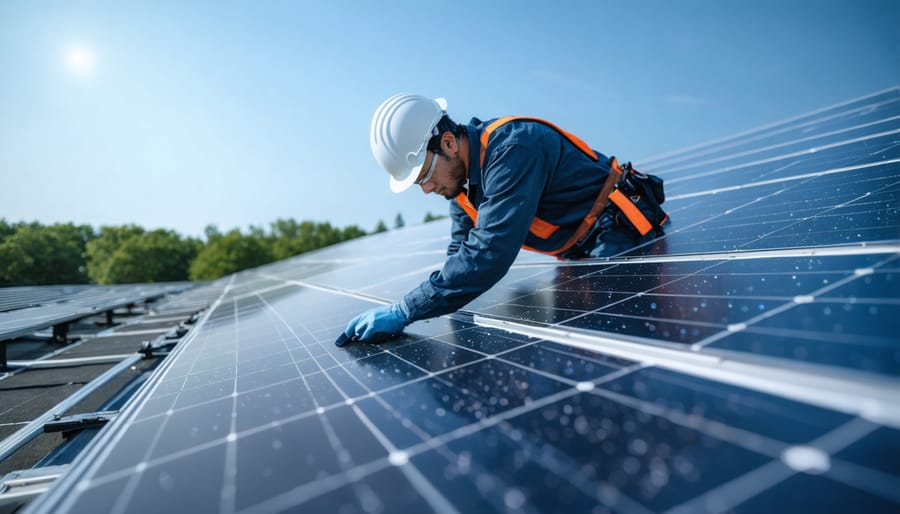
To maintain optimal performance of your solar-powered FM receiver transmitter system, implementing a structured preventive maintenance schedule is essential. Quarterly inspections should focus on solar panel cleanliness, checking for dust accumulation or debris that could reduce energy absorption efficiency. Clean panels using soft brushes and approved cleaning solutions during early morning or late evening hours to prevent thermal shock.
Monthly battery maintenance includes checking terminal connections for corrosion, verifying proper charge levels, and ensuring ventilation systems are unobstructed. Inspect all wiring connections for signs of wear, looseness, or environmental damage. The charge controller settings should be verified bi-annually to maintain optimal charging parameters and protect battery life.
The FM transmitter components require inspection every six months, including antenna alignment check, RF power output verification, and modulation depth testing. During these inspections, check all ground connections and lightning protection systems to ensure safety compliance.
Keep detailed maintenance logs documenting all inspections, cleaning activities, and any system adjustments. This documentation helps track performance patterns and anticipate potential issues before they affect system reliability. Schedule annual professional assessments to validate system calibration and verify compliance with broadcasting regulations.
For systems deployed in harsh environments, increase inspection frequency and implement additional protective measures against environmental factors such as salt air, extreme temperatures, or high humidity.
Solar-powered FM receiver transmitters represent a critical advancement in emergency communications infrastructure, offering reliable connectivity when traditional power grids fail. The integration of renewable energy with communication systems has proven invaluable during natural disasters, as demonstrated by their successful deployment following Hurricane Maria in Puerto Rico and the 2011 Tohoku earthquake in Japan.
The future outlook for these systems is particularly promising, with technological improvements driving both efficiency and cost-effectiveness. Emerging developments in solar panel efficiency and battery storage capacity continue to enhance system reliability, while decreasing implementation costs make widespread adoption more feasible for organizations of all sizes.
Investment in solar-powered FM systems aligns with both disaster preparedness strategies and sustainability goals, offering organizations a dual benefit that resonates with stakeholders and regulatory requirements. The return on investment extends beyond immediate operational benefits to include enhanced community resilience and improved emergency response capabilities.
Looking ahead, the integration of smart technologies and IoT capabilities with solar-powered FM systems will likely create more sophisticated emergency communication networks. These advancements will enable better coordination during crises while maintaining the core benefit of energy independence. For facility managers and emergency response coordinators, incorporating these systems into their infrastructure represents a forward-thinking approach to both sustainability and security.
As climate-related challenges continue to impact global communications infrastructure, solar-powered FM receiver transmitters will play an increasingly vital role in ensuring uninterrupted emergency communications, making them an essential component of modern disaster preparedness strategies.