
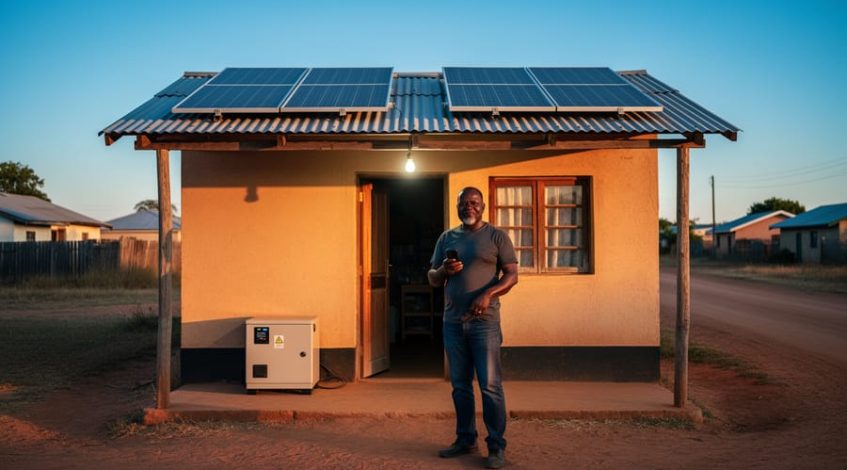
Small off-grid solar power systems represent a $1.75 billion market opportunity that transforms energy access in underserved regions while delivering measurable returns for commercial operators. These compact photovoltaic installations, typically ranging from 10 watts to 5 kilowatts, power essential loads for households and small businesses without connection to centralized electricity grids.
The pay-as-you-go (PAYG) business model has revolutionized small off-grid solar deployment, converting traditional capital expenditure barriers into manageable operational expenses for end users. Commercial operators recover system costs through daily or weekly mobile payments, creating accessible entry points for customers earning as little as $2-5 per day while maintaining ownership of assets that generate predictable revenue streams.
System configurations follow standardized architectures: solar panels capture energy, charge controllers regulate battery storage, and inverters convert DC power to AC when required. Component integration determines system reliability, with quality batteries representing 40-50% of total system costs and directly impacting customer satisfaction metrics that drive payment compliance rates.
Business viability hinges on three critical factors: customer acquisition costs averaging $50-150 per unit, payment collection rates exceeding 90%, and operational efficiency in remote monitoring and maintenance. Successful operators achieve payback periods of 18-36 months through strategic market positioning and technology-enabled service delivery.
Field data from East Africa, South Asia, and Latin America demonstrates proven scalability, with leading providers serving millions of customers while maintaining default rates below 5%. This convergence of social impact and commercial sustainability positions small off-grid solar systems as essential infrastructure for emerging markets and strategic opportunities for energy sector investors seeking portfolio diversification.
Understanding Small Off-Grid Solar Systems in PAYG Models

System Components and Specifications
A small off-grid solar power system with pay-as-you-go functionality comprises four essential components that work in concert to deliver reliable electricity access while enabling flexible payment structures.
Solar panels serve as the primary energy source, typically ranging from 50 to 200 watts for residential applications. Modern monocrystalline or polycrystalline panels convert sunlight into direct current electricity with efficiency rates of 15-20%, providing sufficient power for lighting, mobile phone charging, and small appliances.
Battery storage systems, usually lithium-ion or lead-acid configurations with capacities between 100-400 watt-hours, store excess energy generated during daylight hours for evening and nighttime use. Lithium-ion batteries offer superior cycle life and depth of discharge, translating to longer operational lifespans and better return on investment for system operators.
Charge controllers regulate power flow between panels and batteries, preventing overcharging and extending battery longevity. Maximum Power Point Tracking controllers optimize energy harvest, particularly valuable in variable weather conditions.
The distinguishing feature of PAYG systems lies in the integrated smart control unit with embedded mobile payment technology. This component manages energy access through GSM connectivity, processing mobile money transactions in real-time. When customers make payments via mobile platforms, the system automatically unlocks power access for the corresponding period. Built-in sensors monitor usage patterns and system performance, transmitting data to centralized management platforms that enable remote diagnostics, predictive maintenance, and business intelligence analysis. This technology transforms solar hardware into a manageable service delivery platform, reducing operational costs while improving customer payment compliance rates.
Target Market Characteristics
Small off-grid solar power systems serve distinct customer segments across diverse geographic regions, primarily in rural and remote areas where grid connection remains economically unfeasible or physically inaccessible. The primary market comprises low-to-moderate income households earning between $2-10 per day, representing approximately 1.2 billion people globally without reliable electricity access.
These customers typically require 50-500 watts of capacity to power essential loads including LED lighting, mobile phone charging, small appliances, and basic electronics. Geographic concentrations exist in Sub-Saharan Africa, South Asia, and parts of Southeast Asia, where grid extension costs exceed $1,000 per kilometer.
Customer segments include smallholder farmers seeking irrigation solutions, rural retailers requiring refrigeration, healthcare facilities needing reliable power for medical equipment, and educational institutions. Income variability significantly influences system sizing and payment capacity, with most customers able to allocate $5-20 monthly toward energy expenditures.
Critical considerations for market entry include population density affecting distribution logistics, local regulatory frameworks governing off-grid solutions, cultural attitudes toward technology adoption, and existing energy expenditure patterns on kerosene, batteries, and diesel. Understanding seasonal income fluctuations, particularly in agricultural communities, proves essential for structuring viable payment terms that align with cash flow realities while maintaining business sustainability.
How Pay-As-You-Go Business Models Create Market Access
Payment Structures and Pricing Strategies
Pay-as-you-go solar systems typically offer flexible payment structures designed to align with users’ cash flow patterns and existing energy expenditures. Daily payment options, ranging from $0.10 to $0.50, provide entry-level access for households with irregular income streams. Weekly payments between $1.50 and $3.50 offer a middle ground, while monthly plans from $5 to $15 accommodate those preferring consolidated billing cycles.
These pricing tiers are strategically calibrated against traditional energy alternatives. A typical off-grid household might spend $8-12 monthly on kerosene for lighting, $3-5 on candles, and $2-4 on mobile phone charging services at local kiosks. Combined, these expenditures often exceed $15 monthly, making PAYG solar systems cost-competitive while delivering superior service quality and safety.
Pricing models incorporate several variables: system size (typically 10-50W), battery capacity, number of lights, and included appliances such as phone chargers or radios. Progressive payment structures allow customers to unlock additional features or capacity as they build payment history, creating upgrade pathways that increase system utilization and revenue potential.
Unlike solar microloans requiring upfront creditworthiness assessment, PAYG systems use actual payment behavior as the primary risk indicator. Mobile money integration has reduced transaction costs to under 2 percent, making micro-payments economically viable. Operators typically structure total system costs between $150-300, with payback periods ranging from 18-36 months, after which customers either own the system outright or transition to minimal maintenance fees.
Mobile Money Integration and Remote Monitoring
Mobile payment platforms have revolutionized off-grid solar accessibility in emerging markets, with systems like M-Pesa pioneering Pay-As-You-Go (PAYG) integration. These platforms enable customers to make micro-payments via mobile phones, eliminating traditional barriers associated with upfront capital costs. The technology connects directly to embedded SIM cards or GSM modules within solar home systems, processing transactions in real-time and automatically adjusting system access based on payment status.
Remote lockout and activation technology forms the backbone of PAYG operations. When customers complete their scheduled payments, the system remains operational. Upon payment default, the control unit automatically restricts energy access while maintaining essential battery management functions. This approach protects both customer investment and system longevity, similar to Energy-as-a-Service models employed in commercial sectors.
Performance monitoring capabilities provide unprecedented operational visibility. Cloud-based platforms track energy generation, consumption patterns, battery health, and payment histories across entire system portfolios. Distributors receive automated alerts for maintenance requirements, enabling proactive service delivery and reducing downtime. This data-driven approach optimizes asset management and improves customer satisfaction rates.
Advanced implementations now incorporate blockchain technology integration for enhanced transaction security and transparency. The combination of mobile money platforms, remote control systems, and comprehensive monitoring creates operational efficiencies that reduce administrative costs by approximately 40 percent while expanding market reach to previously underserved populations. These integrated solutions demonstrate measurable ROI improvements for PAYG distributors through reduced default rates and enhanced system utilization metrics.
Business Model Economics and ROI Considerations
Capital and Operational Cost Structure
Understanding the financial architecture of small off-grid solar systems requires careful analysis of both upfront and recurring expenses. Initial capital investment typically ranges from $150 to $500 per household system, depending on capacity and component quality. A basic 50-watt system with LED lighting and phone charging capabilities represents the lower end, while 100-200 watt systems supporting additional appliances command higher prices.
System procurement costs constitute 60-70% of total investment, encompassing solar panels, batteries, charge controllers, and energy-efficient appliances. Distribution network establishment adds 15-20% to initial outlays, including warehouse infrastructure, transportation logistics, and last-mile delivery mechanisms. Customer acquisition costs, often underestimated, consume 10-15% of capital budgets through marketing campaigns, agent commissions, and field demonstrations.
Operational expenses follow a different pattern. Maintenance costs typically run 5-8% annually of system value, covering battery replacements every 3-5 years, technical support staff, and repair services. Mobile payment platform fees add 2-3% of transaction values, while field agent compensation represents ongoing variable costs tied to collection rates and new customer enrollment.
Real-world applications demonstrate cost optimization potential. A Kenya-based provider reduced per-unit costs by 30% through bulk procurement agreements and regional assembly facilities. Their operational efficiency improved when implementing predictive maintenance protocols, decreasing service calls by 40% within eighteen months. These metrics prove critical for achieving break-even within 24-36 months while maintaining competitive pricing structures that enable customer affordability and business sustainability.
Revenue Models and Profit Margins
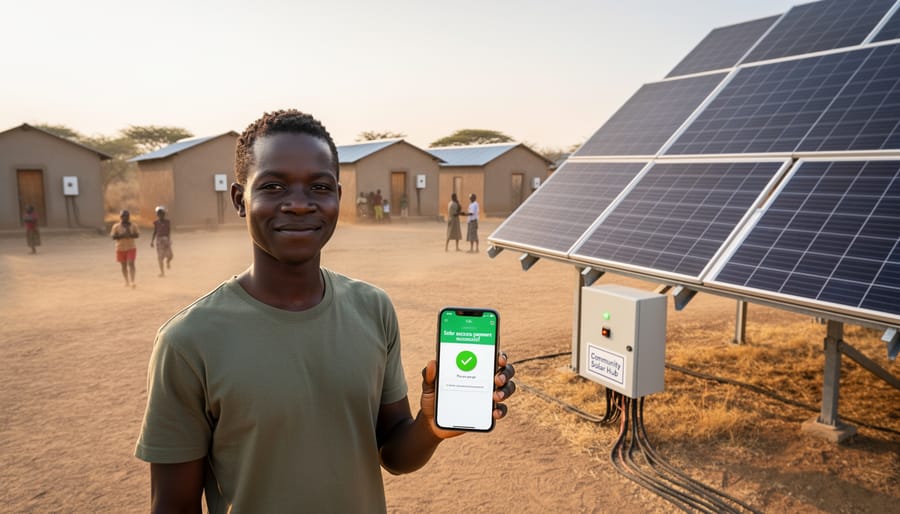
Small off-grid solar systems operating on Pay-As-You-Go models demonstrate compelling financial metrics for both providers and customers. Typical customer payback periods range from 12 to 24 months, depending on system size and usage patterns. During this period, customers make regular mobile payments that are significantly lower than traditional energy expenditure on kerosene, candles, or diesel generators.
From a business perspective, revenue streams begin immediately upon installation, with adaptive pricing strategies enabling optimized payment collection based on customer capacity and seasonal variations. Industry data indicates default rates typically range between 3-8% when robust credit scoring and customer engagement protocols are implemented. Successful operators employ remote monitoring systems to track payment patterns and usage metrics, allowing for proactive intervention before defaults occur.
Long-term customer value extends beyond the initial payback period. Once systems are fully paid, customers often upgrade to larger capacity units or add complementary products, creating recurring revenue opportunities. Operators maintaining strong customer relationships report lifetime values exceeding 3-4 times the initial system cost, driven by product upgrades, maintenance contracts, and referral-based expansion.
Implementation Framework for Commercial Operators
Market Assessment and Regulatory Compliance
Successful deployment of small off-grid solar systems requires thorough market assessment and regulatory due diligence. Begin by analyzing target demographics, including population density, electrification rates, income levels, and energy consumption patterns. Understanding payment capacity and mobile money penetration is essential for PAYG model viability, as these factors directly impact system affordability and collection mechanisms.
Regulatory compliance varies significantly across jurisdictions. Research national energy policies, renewable energy targets, and specific legislation governing off-grid solar installations. Many countries have established regulatory frameworks that define technical standards, quality requirements, and consumer protection measures for solar products. Engage with relevant authorities such as energy regulatory commissions, rural electrification agencies, and standards bureaus early in the planning process.
Securing necessary permits typically involves multiple steps: business registration, import licenses, electrical contractor certifications, and system installation approvals. In some markets, distributors must register products with quality assurance programs or obtain certification from recognized testing laboratories to verify equipment meets international standards like IEC or Lighting Global specifications.
Import and tax considerations significantly affect project economics. Investigate duty exemptions, value-added tax waivers, or preferential tariff rates available for renewable energy equipment. Many governments offer fiscal incentives to accelerate solar adoption, reducing landed costs by 15-40 percent. Additionally, assess foreign exchange regulations, repatriation policies, and local content requirements that may influence supply chain decisions. Partnering with experienced local consultants or industry associations can streamline navigation through complex regulatory environments while ensuring compliance with evolving policy landscapes.
Distribution and After-Sales Service Networks
Establishing robust distribution and after-sales service networks is fundamental to the success of small off-grid solar systems operating under pay-as-you-go models. For business operators entering this market, the emphasis must be on creating sustainable infrastructure that ensures long-term customer satisfaction and system performance.
Local distribution channels should leverage existing retail networks, microfinance institutions, and community-based organizations familiar with target markets. Training field agents becomes critical, as they serve as the primary customer interface. These agents require comprehensive education on system installation, customer onboarding, payment collection, and basic troubleshooting procedures. Successful operators typically invest 40-60 hours in initial agent training, followed by ongoing professional development.
Building effective service networks demands strategic placement of service centers within reasonable distance of customer clusters, typically within 50-100 kilometers. This infrastructure supports preventive maintenance, component replacement, and technical support. When establishing solar service contracts, clear warranty terms covering manufacturing defects, performance guarantees, and response timeframes must be defined.
Real-world applications demonstrate that operators maintaining service response times under 48 hours achieve customer retention rates exceeding 85%. Mobile service units equipped with diagnostic tools, replacement components, and trained technicians reduce downtime significantly. Remote monitoring capabilities enable proactive maintenance, identifying potential failures before customers experience service disruption. This approach not only enhances customer experience but also protects revenue streams by maintaining system uptime, directly impacting return on investment for solar operators.
Real-World Applications and Performance Data
Practical deployments of Pay-As-You-Go solar systems across diverse markets have generated measurable performance data that validates the business model’s viability. In East Africa, M-KOPA Solar has deployed over 1 million small off-grid systems since 2012, achieving payment compliance rates exceeding 90% across Kenya, Uganda, and Tanzania. The company’s 50-watt base systems, priced at approximately $200 with daily payments of $0.50 over 12 months, demonstrated that structured micro-payment schedules aligned with income patterns significantly reduce default risk.
A compelling case study from rural India involved SELCO Foundation’s deployment of 200-watt systems to 5,000 households across Karnataka state. The project recorded 87% full payment completion within the contracted 18-month period, with customer satisfaction ratings of 4.2 out of 5. Monthly collection efficiency averaged 94%, attributable to mobile money integration and localized service centers positioned within 15 kilometers of customer clusters. The deployment generated a 22% internal rate of return for investors while reducing household energy expenditure by 35% compared to kerosene and battery charging costs.
In West Africa, BBOXX’s operations in Togo and Rwanda provide valuable metrics on scalability. Their modular approach, starting with 10-watt entry systems expandable to 120 watts, achieved 78% customer upgrade rates within two years. The phased acquisition model reduced initial capital requirements by 40% while maintaining gross margins above 25%. Customer acquisition costs averaged $85 per unit, with break-even occurring at month 16 of the typical 24-month payment cycle.
Performance data from the Philippines’ island communities revealed different dynamics in maritime environments. Solar Philippines deployed 1,200 systems across Mindanao, experiencing 82% payment compliance despite seasonal fishing income variations. The implementation incorporated flexible payment holidays during monsoon periods, demonstrating how contextual adjustments enhance model sustainability. Average system uptime exceeded 96%, with remote monitoring reducing maintenance response times from 72 hours to less than 24 hours.
These deployments collectively demonstrate that PAYG solar systems achieve financial sustainability when supported by robust payment infrastructure, localized service networks, and customer-centric financing terms. The data indicates that proper market assessment, technology selection, and operational execution can consistently deliver positive business outcomes while expanding energy access.
Risk Management and Scalability Strategies
Operating small off-grid solar power systems at scale requires proactive risk mitigation strategies to ensure long-term viability and profitability. Payment defaults represent the most significant operational challenge, with some markets experiencing default rates between 15-30% during economic downturns. Implementing robust credit scoring systems, requiring modest down payments (typically 10-15% of system cost), and establishing clear payment terms with automatic reminders significantly reduces default risk. Remote monitoring capabilities enable immediate detection of payment irregularities and allow for swift system deactivation until accounts are current.
System quality issues pose reputational and financial risks that can undermine entire operations. Partnering with certified manufacturers, conducting rigorous pre-deployment testing, and maintaining adequate warranty provisions protect against premature failures. Field data indicates that systems using tier-one components experience failure rates below 5% annually, compared to 20-25% for lower-quality alternatives. Establishing local technical support networks and maintaining spare parts inventory ensures rapid response times, typically resolving 80% of issues within 48 hours.
Competitive pressures intensify as markets mature, requiring differentiation through superior service quality, flexible payment options, and value-added services such as appliance financing. Organizations successfully scaling operations typically achieve break-even at 5,000-10,000 active customers, then leverage economies of scale for component procurement and operational efficiency.
Geographic diversification across multiple regions mitigates country-specific regulatory changes and economic volatility. Leading operators maintain presence in 3-5 markets, reducing portfolio risk while capturing growth opportunities. Currency hedging strategies protect against exchange rate fluctuations in international operations.
Insurance products covering default risk, natural disasters, and equipment theft provide additional protection layers. Successful operators allocate 2-3% of revenue toward comprehensive risk management programs. Data analytics platforms identifying early warning indicators enable preemptive intervention, reducing potential losses by 40-50%. Establishing strong relationships with local communities and government entities further enhances operational stability and facilitates regulatory compliance.

Pay-as-you-go solar systems have demonstrated substantial commercial viability while addressing critical energy access challenges in emerging markets. The model’s success stems from its ability to convert unelectrified populations into revenue-generating customers through affordable payment structures, creating sustainable business opportunities with measurable social impact. Companies entering this sector should recognize that success requires more than technology deployment—it demands robust mobile payment infrastructure, localized customer service networks, and data analytics capabilities to manage distributed assets effectively.
For businesses considering market entry, strategic priorities include thorough market assessment focusing on mobile money penetration rates, competitive landscape analysis, and regulatory environment evaluation. Partnerships with local financial institutions and telecom providers significantly enhance operational efficiency and customer acquisition. Organizations expanding existing operations should prioritize data-driven portfolio management, predictive maintenance systems, and customer retention strategies to optimize unit economics.
The sector presents compelling opportunities for both established solar companies diversifying their offerings and new entrants targeting underserved markets. Financial projections indicate that well-executed PAYG operations achieve profitability within three to five years, with customer lifetime values substantially exceeding acquisition costs. As battery storage costs continue declining and digital payment platforms expand globally, the addressable market for small off-grid solar systems will broaden, positioning early movers to capture significant market share in the ongoing global energy transition.